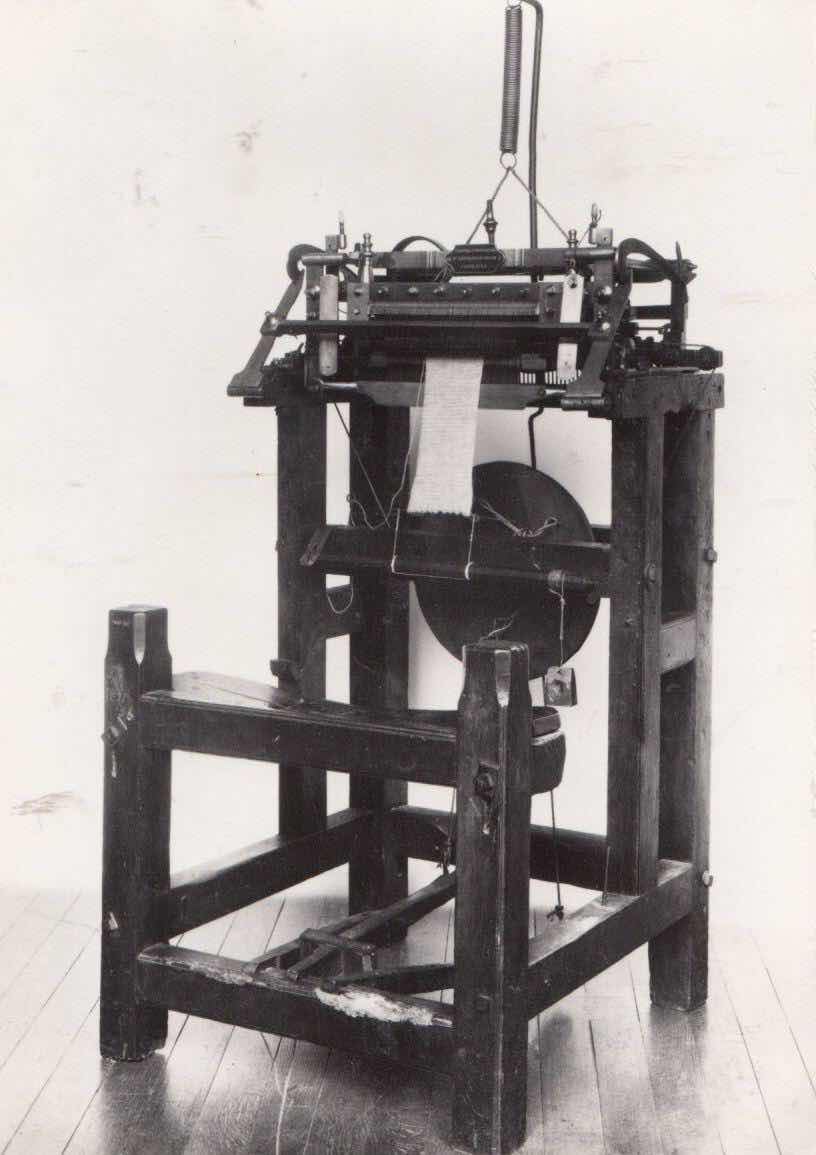
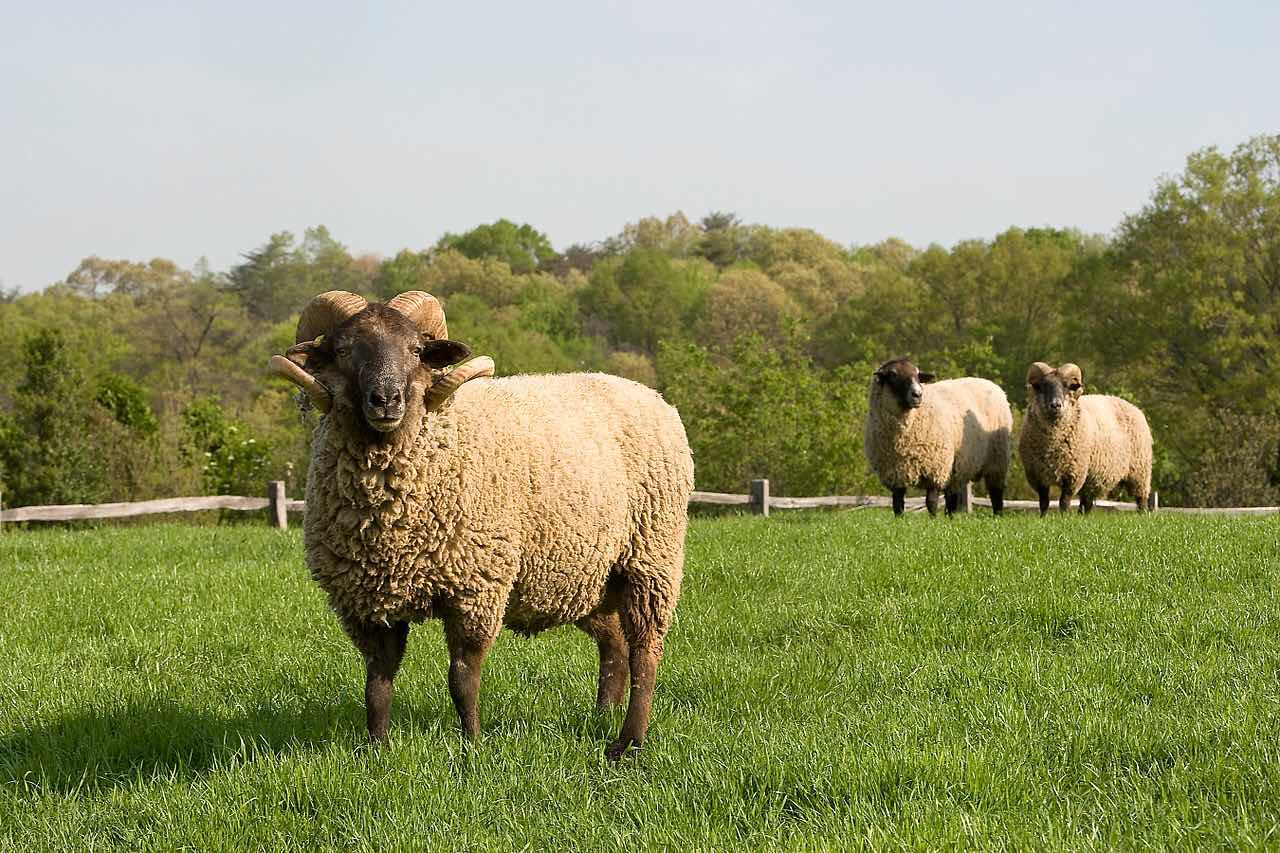
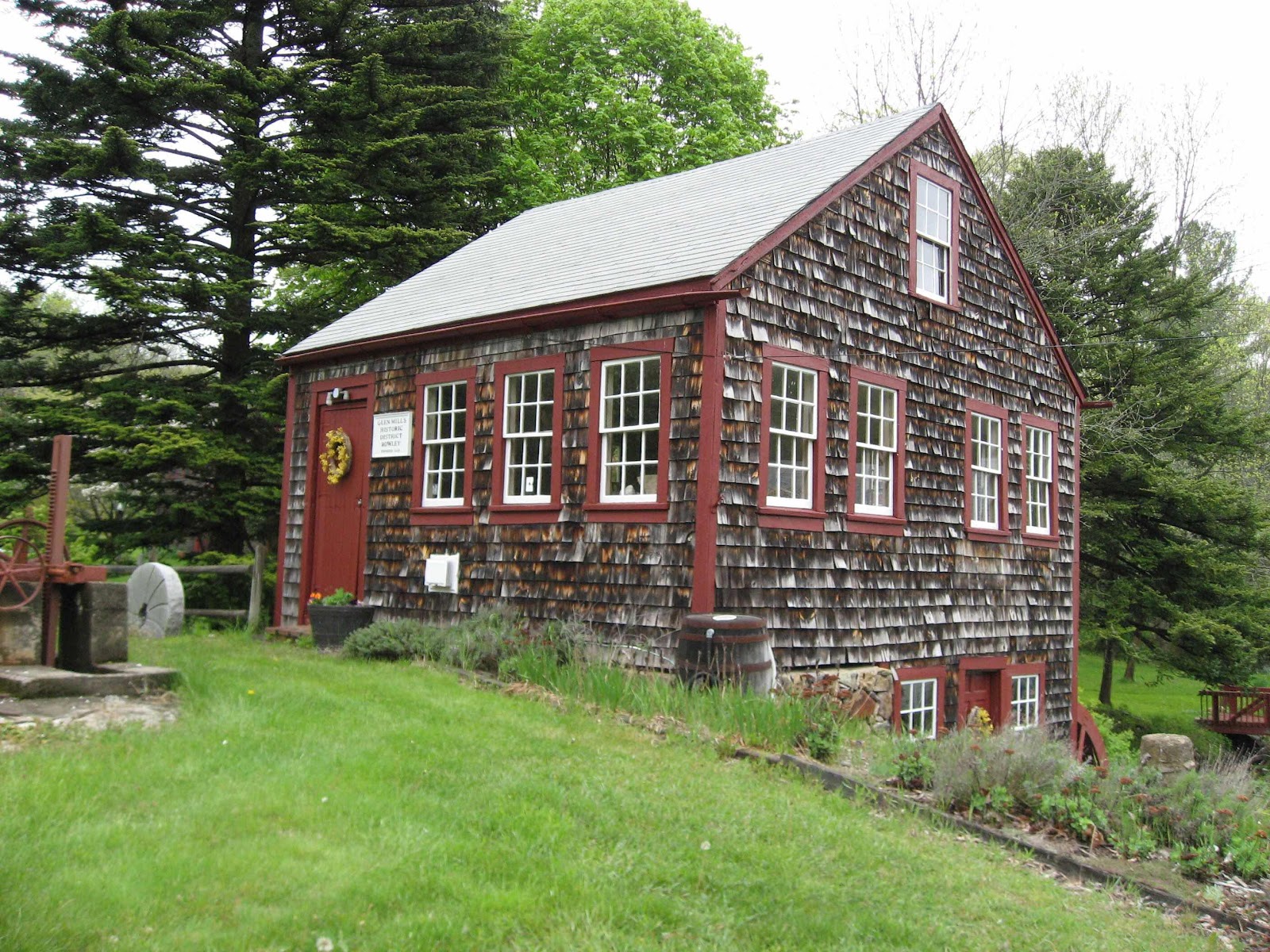
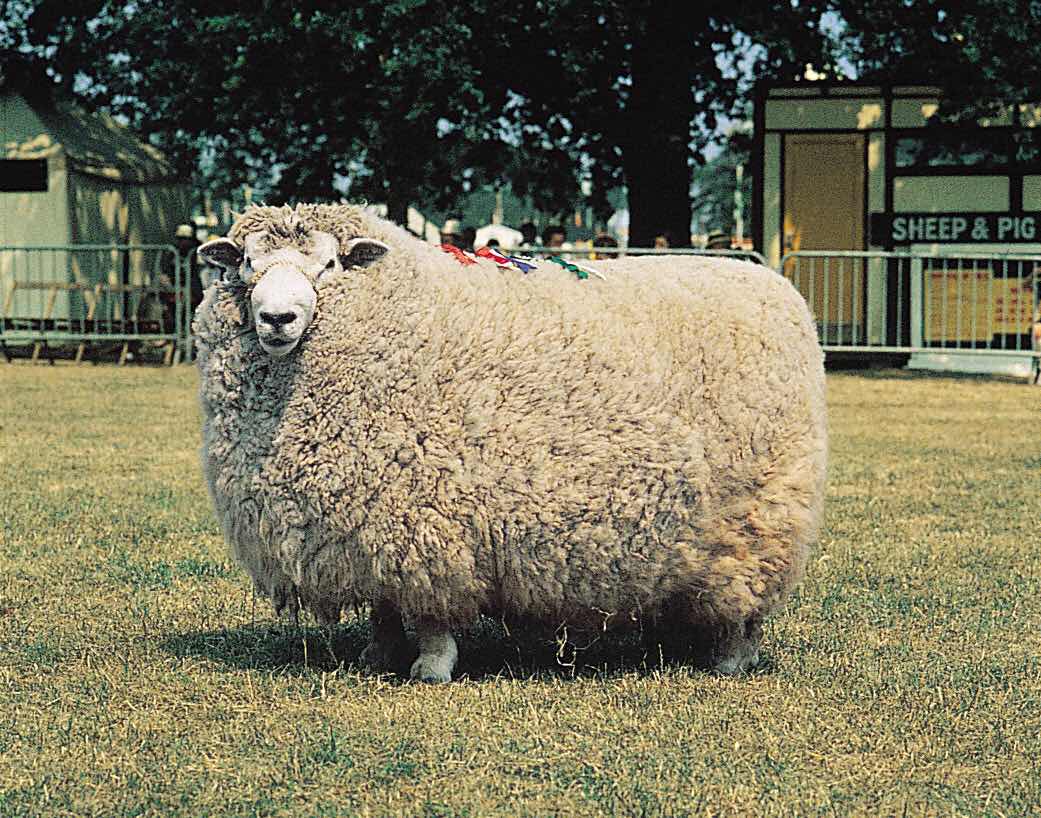
Enslaved workers usually received most, if not all, of their clothing as an allowance from their owners. Some owners issued fabric, expecting the slaves to cut and sew their own clothing; some plantation mistresses cut out or supervised the cutting out of garments from plantation-made or purchased cloth, to be made up by slave seamstresses or by the mistress and her daughters; and sometimes ready-made garments or pre-cut garment pieces were imported from northern manufacturers.
Mississippi slaveholder Stephen Duncan Jr. allowed the slaves on his Carlisle plantation a generous annual allotment in the 1850s: Men and boys were given eight yards of cotton cloth to make three shirts; five and one-half yards of osnaburg for two pair of summer pants; and two and three-quarters yards of jeans for winter pants; plus a coat made from broadcloth and two pairs of shoes. Girls and women received thirteen yards of shirting for three shifts and a gown; two and one-half yards of osnaburg for a petticoat; five yards of linsey for a winter gown; and, if she was a field worker, a broadcloth coat and two pairs of shoes. Women who worked inside received only one pair of shoes and no coat. All children regardless of gender were given one linsey and three cotton slips made of about a yard and a half of fabric.
Former slave Louis Hughes recalled in his memoir that the male field workers held on the Mississippi plantation owned by his master Edmund McGee were given two shirts, two pair each of summer and winter pants, plus a coat, hat, and pair of shoes in the winter. The women were given two summer dresses and chemises and at least one winter dress. Women also received a pair of winter shoes and cloth for a turban. Enterprising women made pantalets from cast off men’s trousers, tied above the knee to protect their legs. Once, McGee purchased red and yellow checked gingham in Memphis that was doled out to make “Sunday only” turbans for the women workers. Hughes himself, as a house servant, wore pants and a coat made from his master’s cast-off clothing. When McGee built a new mansion in Memphis, Hughes was given a white stiff-bosomed shirt, a white linen apron, and a new wool broadcloth suit in which to wait at table. Hughes remembered that “this little change” in his appearance heartened him, looming large in a life that had “known no comforts.” One observer reported that in Louisiana, “they are very particular about feeding and clothing their negroes among the French generally—they have changes of clothes and dress neatly on Holidays and Sundays."
Descriptions of lesser quantities may be closer to the norm: In South Carolina, for example, rice planter John Potter distributed 1800 yards of cloth per year among his 400 workers—an average of four and one-half yards per person, “beside blankets every three years.” An enslaved coachman in the Sea Islands told Laura Towne that he was doled out two suits of clothes a year. Pierce Butler’s Sea Island slaves received “a certain number of yards of flannel, and as much more of what they call plains—an extremely stout, thick, heavy woolen cloth, of a dark gray or blue color, which resembles the species of carpet we call drugget. This, and two pair of shoes, is the regular ration of clothing.”
That “regular ration” however, may not have been evenly supplied: Butler’s wife Fanny Kemble described the slave workers of St. Annie’s village on St. Simon’s Island as neglected and half-naked, perhaps because their cotton crops had been decreasing with the exhaustion of the soil. Kemble also wrote that the “plains” cloth was intolerably hot and uncomfortable even in the island’s winter climate and that flannel for winter and dark chintz for summer would have been better choices.
Hard agricultural labor in an unforgiving climate is likely to have taken a serious toll on the integrity of a field hand’s clothing. Just as men’s worn out trousers became women’s leggings, other remnants of previous allotments must have been re-used.
House servants, particularly in elite households, might be better clothed than field hands, but that was not universally true. Charleston’s Mary Pringle, whose rice planter husband owned more than 300 slaves spread across four plantations, gave her male house servants a livery coat and vest, four cravats, and two pocket handkerchiefs, in addition to four shirts, two or three pair of pants, three vests, and two coats, in two allotments, one summer and the other winter. The livery may have been worn only for the most formal or public occasions. South Carolinian Mary Chesnut described the housemaids’ uniform at her father-in-law’s Mulberry Plantation:
The maids here dress in linsey-woolsey gowns and white aprons in the winter—and in summer, blue homespun. These deep blue dresses and white turbans and aprons are picturesque and nice looking. On Sundays their finery is excessive and grotesque. I mean their holiday, church, and outdoor getup. Whenever they come about us they go back to the white apron uniform.
A photograph in the Valentine Richmond History Center collection, inscribed on the reverse “Aunt Lizzie,” depicts a neatly and fashionably dressed and groomed young African American woman holding a white infant in elaborate white long clothes. “Lizzie” wears a dress, probably of cotton, printed with a small repeating figure on a dark ground. The dress has long full sleeves gathered to a cuff, dropped shoulders, and a high round neckline with a white collar and a bar pin at the throat. Her hair is pulled back and tied or braided, with a neat flat-bowed ribbon hairband to keep it off her face. The outfit may in fact reflect her everyday appearance as a child’s nurse in a well-to-do Richmond household, and not merely finery adopted only for the photograph.
In a similar photograph at the Kentucky Historical Society, marked “Kate & Violet,” both the child and the nurse are more plainly dressed: the child in an ankle length A-shaped cotton dress and the nurse in a printed cotton dress with dropped shoulders and fitted sleeves, a high round neckline finished with a narrow white band, a white headcloth or turban, and drop earrings. Both the child’s and the nurse’s dresses in the photograph are wrinkled—it does not appear that they dressed up at all for the event, but the nurse’s calico is a step up in the fabric hierarchy from linsey or osnaburg.
A printed calico dress may not always have been a marker of house-servant status, however. In his 1981 essay on slave cloth and northern capital, historian Myron Stachiw quoted from a letter written by a plantation owner’s wife to a dry goods merchant in New Orleans in 1835, “I must request the favor of you to add 28 yards of cheap calico. Please let it be gay. I have always given a dress of such to every woman after she has a young child. They do much better being encouraged a little.” The thoughts and feelings of the women who received perhaps a dollar’s worth of calico for bearing a child into slavery are not recorded.
Slave owners who lived away from towns and close neighbors may have felt less social pressure to dress their house servants any better than their field workers. The young enslaved servant on an upriver South Carolina rice plantation who brought English journalist William Howard Russell his shaving water and clean boots in the morning was clad in a “sort of sack, without any particular waist, and barefooted.” Russell was surprised to find the child was a girl of about fourteen. Although some photographs taken during the Civil War show recently freed children dressed in shirts and trousers or dresses, most descriptions of enslaved children describe them as being dressed in a shirt or shift regardless of gender.
Mary Chesnut described the young enslaved servant who “minded” the children of an acquaintance as a “Topsy,” after the character in Uncle Tom’s Cabin. Chesnut added, “Topsy is clad as she is always—one straight homespun garment.”
Mary Chesnut’s reference to the enslaved house servants’ Sunday “finery” suggests that these garments were acquired outside the normal allowance. Hand-me-downs from their white owners or goods purchased with cash or by barter may have comprised the house servant’s Sunday best—attracting many comments in Charleston’s class-conscious society about its unsuitability. Slaves who hired out as artisans, or who earned some money on the side, may not have received a clothing allowance at all. John Judah, a Virginia slave who escaped in 1855, paid his owner $110 a year out of his earnings, and “as he was fond of nice clothing, he was careful to earn a balance sufficient to gratify this love. By similar means, many slaves were seen in southern cities elegantly dressed, and strangers and travelers from the North gave all the credit to ‘indulgent masters,’ not knowing the facts in the case.” On several Louisiana plantations, the “negroes rear domestic birds of all kinds, and sell eggs and poultry to their masters. The money is spent in purchasing tobacco, molasses, clothes, and flour.” Those items were small luxuries in a spare life.
Cloth sold for distribution to slaves might be all cotton, cotton and wool, or all wool, depending on the season. Goods sold to slave owners designated as “Slave cloth,” “Negro cloth,” or “Plantation cloth” were always inexpensive and durable rather than comfortable or fashionable. The common descriptors for these fabrics were “coarse” and “stout.” One common slave cloth was osnaburg, a plain weave cotton sold in solid colors (natural unbleached or white, brown, or blue) and in stripe or check combinations of those shades. Linsey (or “linsey-woolsey”) originally had a linen warp and a woolen weft but in the nineteenth century the warps were most often cotton. Kersey was a twill weave fabric made from short staple wool fibers. Satinet used cotton warps and a woolen weft in a broken twill weave with long floats, giving a smoother surface without a sharply defined diagonal ridge. Jean or jean cloth was occasionally supplied to slaves. Rhode Island manufacturer William Dean Davis began his business selling kerseys and linseys, for example, but in 1839 added all-wool jeans and plains. Jean was most commonly all cotton or cotton warp with a woolen weft, in a twill (diagonal rib) weave, and categorized with other durable fabrics meant for working clothes, such as fustian and denim.
Clothing was an important and immediately visible mark of social status, and osnaburg, jean, and kersey were considered suitable for the lower ranks of society. All of the available cloths came in several qualities, ranging from the cheapest sold to slave owners to better grades purchased by laborers, farm workers, craftsmen, and mechanics—both white and black—who also required durable but inexpensive cloth.
William Davis, for example, sold nine bales of assorted linseys from his Rhode Island mill to Baltimore merchant William E. Mayhew in 1838. They ranged in quality from 18 to 24 cents per yard, and came in black and white, red and blue, “mixed”, and plaid, “heavy and even for linseys and well calculated for the Southern trade.”
Southern trade was not necessarily restricted to slaves. Isaac P. Hazard found that in South Carolina, “Many of the country small planters dress in just such Walnut Linseys as we make except that the warp is coarser being spun by hand,” suggesting that below the elite levels of Southern society, sturdy cloth was as important to the white population for their own consumption as for their slaves.
For the higher end of the social scale, merchants carried higher quality cloth, such as the “Indigo Blue Jeans, a very fine article manufactured in Baltimore for planters suits” sold by a Natchez dry goods firm in 1861—this jeans cloth, probably all wool, is not comparable to the ubiquitous blue jeans of our time.
In the 1820s, Rhode Island slave cloth manufacturer Isaac Peace Hazard spent much time in the South selling cloth and investigating the needs of the market. His letters to his brother Rowland indicate that the enslaved sometimes had a say in what they wore. In 1824 some of his southern customers said their linsey cloth “would not suit servants unless it was blue,” and a few years later Isaac reported that “Grey goods answer only for the interior.”
One planter near Beaufort, South Carolina, told him that his enslaved workers refused to wear cloth made of cotton and wool, such as the Hazard’s linsey. At the time, the Hazard mill was not yet supplying all the cloth the firm sold. Complaints from plantation owners about the variation in the contents of the bales of cloth they received were common, and Isaac wrote home that one of their contract weavers, John D. Williams (who by 1845 owned two mills making slave cloth), “does not twist enough or let the wool lie long enough in the dye” and that the slaves held by rice planter John Potter “did not complain much but exhibited their clothes to him, some were as thin as baize, threads not beat close together, others split all to pieces."
The commerce of slave cloth held many ironies. Enslaved cotton plantation workers raised, harvested, ginned, and baled raw cotton to send to local, northern, and European spinning, knitting, and weaving mills. They then received back the finished cloth and clothing that marked them as slaves. Many individuals ignored or suppressed their consciences or principles in the pursuit of profit.
Rowland G. Hazard, owner with his brother Isaac of the Peace Dale Manufacturing Co. in Rhode Island, for example, was educated at the Friends Academy in Westtown, Pennsylvania, and in the 1840s provided legal assistance to free men of color who had been seized in New Orleans and held as runaway slaves. The Peace Dale Manufacturing Co. employed (at least in the 1810s) free African American labor for carding and spinning. Hazard’s business records and correspondence reveal the contradiction between his personal values and his business practices. The woolen mill in Peace Dale churned out thousands of yards of kerseys specifically for clothing slaves.
Stephen Duncan, the Mississippi planter mentioned previously, wrote the firm in 1835 to say, “I find the ‘Double Kerseys’ of excellent quality—but to be candid—do not think them equal to an article made in Kentucky called 'Jeans'.” A year later, Rowland Hazard wrote his brother that another customer, “R C Nicholas was much pleased with the goods. His negroes he says are delighted with it & call it the iron cloth & say it will never wear out.” An inquiry from a tailor seeking a position to work in the firm’s “southern trade” indicated that the company was also engaged in producing ready-made or pre-cut slave clothing.
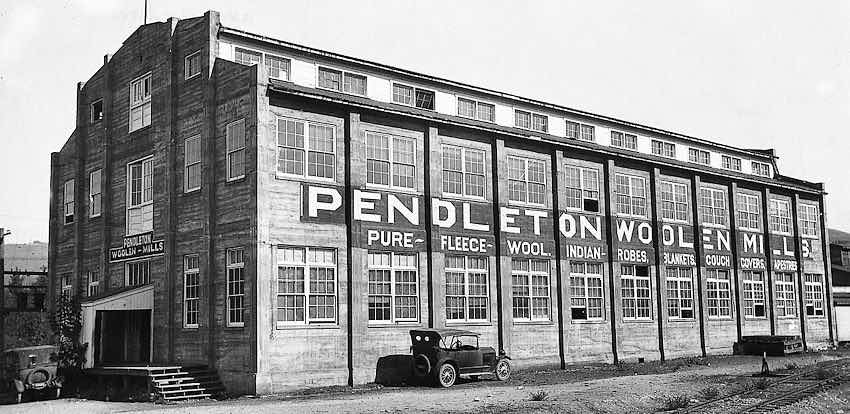
A dozen years later, in 1850, Rowland Hazard made a fervent anti-slavery speech to the Rhode Island House of Representatives, indicating that he may have wished to dissociate himself from profiting by slavery. In 1855, when the Hazard kersey mill burnt down, the brothers changed their production to finer goods such as cassimeres and shawls. Few of Rowland Hazard’s textile colleagues followed his lead: Americans raised few fine-fleeced sheep such as merino in the antebellum years, which in part accounted for the fact that most American woolen mills produced the coarser fabrics. The first domestic manufacturer of slave cloth on an industrial scale may have been the Matteawan Company of Fishkill, New York, (Peter Schenck & Co., agents), which began operations in 1814 and was well established in the southern market by 1823. Isaac P. Hazard commented from Charleston, “the Matewan goods are very celebrated here—Schenk has taken much pains to make goods to suit this market and they have paid him well for it.” In 1845, seventeen of the forty Rhode Island textile manufactories listed in one directory specialized in Negro cloth. This was more than any other state and more than all the southern states combined. The 1860 census of American manufactures still placed Rhode Island first in production of mixed cotton and woolen “satinets, linseys, kerseys, jeans, and negro cloths.”
British mills exported large quantities of blankets and slave cloth to the American South. On 9 March 1764, Georgia planter and merchant James Habersham wrote his London agent William Knox requesting to have some slave clothing made up for his slaves as well as for the slaves of Georgia Royal Governor James Wright and Francis Harris, Habersham’s merchant partner. Habersham expressed that he hoped that importing the clothing would be cheaper but that they would be “a little better than common.” They needed 120 men’s jackets and breeches and eighty women’s gowns, with half of them sized medium, a quarter sized large, and the remaining quarter sized small. Habersham continued to outline his order:
You know that 5 yds of Plains usually makes a mans jacket & Breeches or a womans gown, and cost of the best bought here with making is about 10 S and for this sum I suppose they may be had in London of Cloth at least stronger and more durable and consequently warmer and more comfortable— You see we dont purpose any saving or rather that is not our motive tho’ the more saved the better, as the charges landed here will at least come to 10 or 12 pCt. Mr Mc Gillivray has imported Sailor Pea Jacket and I believe Breeches made of the same Cloth for his Men and the former cost in London 7s and the latter 3-6[s] but this cloth must be too heavy and clumsy for womens wear. However something of the kind may answer for men. If I remember, I think the west Country Barge Men have their Jackets made of a very strong, cheap cloth, I believe called Foul Weather and the Color being Drab or something like it I should think wou’d suit our dusty Barns as well as their dusty flour sacks. Upon the whole there is no directing from this Distance. In London you may have anything the Nation may furnish… you know we have sometimes some very sharp days the beginning of October, when the Negroes unless fresh supplyed, are usually in rags.
In a post-script, Habersham added that “Mr. Mc Gillivray” had purchased the clothing for his workers from a “Mr Jesser who I think lives near Billings gate, and were charged as follows”:
Mens Jackets. 7s
Boys Ditto 5/
Mens Breeches 3/6
Boys Ditto 2/3
But I suppose what were called Boys for lads from 15-17 which will agreeably do for some small men, Since writing the foregoing, I am told, what are called Short Gowns or wrappers with petticoats are best for women.
Habersham’s concerns about the quality of clothing he wished to purchase from England would continue for many planters into the nineteenth century, when the woolen mills of Yorkshire made much use of “shoddy,” or recycled wool, in the weft or filling of blankets and other cloths meant for the slave market. Incorporating shoddy in these cloths decreased their cost and made them cheap enough to enter America at the lowest tariff rates. According to Robert Maxwell, a South Carolina planter consulted by Rhode Island slave cloth manufacturer Isaac P. Hazard in 1823, he preferred to buy Welsh Plains:
made by the farmers of Wales and purchased by merchants or dealers in the town of—where they are bleached or cleaned, folded in pieces of 90 or 100 yds each—Five pieces put in a bale and sent to this country and are superior to any thing made in England for Negro Clothing. Manufacturers he says there have tried to imitate them but have not succeeded.
Another planter, John Potter of South Carolina, imported blankets from England for use on his plantations. He showed Isaac Hazard some samples that surprised Hazard by their quality. “We have little idea how particular such persons are in purchasing for their Negroes,” Isaac wrote home. Of course Potter knew that Hazard was collecting information on the southern market for use in his manufacturing business, and may have been showing him better quality goods than he actually distributed. Hazard continued that Potter was “in favor of using Domestics [northern-made cloth] if they can be made as well as imported and as low a price.”
Imports of slave cloth and clothing from the American North or from Britain were only a part of the total slave cloth industry. Plantation diaries and letters and the memoirs of freed or escaped slaves are full of references to the skilled labor of enslaved artisans who spun, dyed, and wove cloth or stitched bedding and clothing for themselves and their owners. The term “homespun” was often applied indiscriminately in the South (especially just before and during the Civil War) to describe cloth woven:
• in plantation weave rooms by slave artisans;
• in homes or small workshops by skilled weavers supplementing their income from farming or another profession;
• in southern factories and mills by a mix of wage-earning and enslaved, skilled and unskilled men,
women, and children; and
• during the Civil War, in homes by white inhabitants who either re-learned forgotten skills or learned to weave for the emergency.
In its broadest sense, “homespun” meant simply not imported.
It was not unusual for plantations to have facilities and equipment for spinning and weaving. George Washington had a weave shed at Mount Vernon. During the American Revolution, Eliza Yonge Wilkinson of South Carolina recounted in a letter that when a troop of British soldiers came by her family’s plantation, one of the officers kept chatting with her while his men rounded up some pigs. She described the scene:
We had a great deal of chit chat but were interrupted by a little girl of mine, who came to tell me that the soldiers had cut my homespun out of the loom, and were bundling it up. “Why, Capt. Sanford,” said I, “you command a gang of them. Pray make them deliver the cloth. Your countrymen will not let us have Negro cloth from town, for fear the rebels should be supplied; so we are obliged to weave.”
On the eve of the Civil War, small carding and spinning mills that sold prepared fibers or finished yarns to local consumers dotted the southern landscape; in fact, the South’s spinning mills produced about 30 percent of the nation’s yarn in 1860 (although less than five percent of the cloth). Enslaved workers also spun yarn for knitting and weaving, both for plantation use and for their white owners—and some of this prepared yarn was bartered to local weaving mills for cloth. Other planters chose to have their cotton spun at a local mill and taken back to the plantation for enslaved workers to knit and weave for their own use. Because of this pattern of use, the quality of the yarn is an uncertain gauge of where a fabric was made. While some home weavers were novices and unskilled—or simply careless—so too were some factory hands. Handspun yarns and uneven selvages may not indicate home- or plantation-made cloth, and, conversely, factory-spun yarns and a tight, even weave are not always hallmarks of mill production.
Sarah Anne DeSellum, who lived with her bachelor brother on a plantation outside Gaithersburg, Maryland, happily showed off her long-functioning spinning room of three wheels to the Union officers who came to evaluate damages done to her property by the northern army. Her slaves spun, Sarah Anne did the weaving, and the cloth was used for slave clothing. “Aunt Liza,” the woman who wove cloth for the 160 enslaved workers on the McGee family’s Bolivar, Mississippi, plantation, was expected to weave nine or ten yards of cloth a day. Her mistress warped the loom, assisted by a boy house servant, and had also taught Aunt Liza to weave. This one enslaved woman is said to have woven about half of the cloth needed to keep the plantation workers clothed, primarily in summer weight goods. The heavier winter fabrics were purchased.
Mills operating in the American South also competed for the slave cloth market. Columbus, Georgia, had several factories, including the Grant Factory, which opened in 1844 originally as the Coweta Manufacturing Co., producing mainly spun yarns and osnaburgs, with smaller quantities of rope, thread, and linseys. That mill preferred to hire poor white women and girls, who, working in family groups, “secured adequate means for their support, and with proper economy, may gradually accumulate a competency.” The Mississippi Manufacturing Company in Choctaw County, Mississippi, sold cotton thread locally in 1850, and was just that year installing looms for osnaburgs and linseys, along with wool carding machinery. Within five years, the owner added all-woolen kerseys to his line, which “did not meet as much competition from plantation loom houses” as the all-cotton or mixed wool and cotton goods. By 1860 the company, which originally employed primarily white workers, made a full line of yarns, as well as osnaburg, jean, linsey, and kersey. Another Mississippi firm, the Woodville Manufacturing Company, opened in April 1851. Its first reported product, appropriately enough, was a “bolt of lowell,” the plain cotton cloth so useful for sheeting, shirting, and other domestic uses that rolled by the mile off the looms of Lowell, Massachusetts. “Woodville cottons for negro clothing and cotton sacking” were advertised and priced against Lowell’s northern products across the state. Woodville also made linseys and yarns, and expanded to include kerseys shortly after the owner dismissed his white employees in 1852 and ran the factory with slave labor. Atlanta merchant J.L. Cutting advertised “A superior lot of Georgia Plaines, Quilled Kerseys and Blankets” among the plantation goods he carried in 1859. As the secession crisis deepened during the 1860 presidential election cycle, more planters looked to buy southern-made products. Chamberlin & Smith of Natchez offered “Louisiana, Alabama, Maryland, and Virginia osnaburgs; brown domestics; linseys, kerseys; jeans; long cloths; bleached domestics; bed ticks; Kentucky Jeans and Linseys; Tennessee Truck, for Trousers” in early 1861.
Several southern penitentiaries used inmate labor to compete in the coarse cloth market, first to clothe the inmates and then to make money by selling surpluses locally. During the Civil War they supplied yarn and cloth to locals and to the Confederate army. The state prison in Jackson, Mississippi, switched to steam powered equipment in about 1848, and by 1850 could make 6,000 yards of cloth per week. Gideon Lincecum, a planter in Long Point, Texas, tried repeatedly to no avail in 1862 to trade the Huntsville, Texas, penitentiary a supply of raw cotton and wool raised by the hundred slaves on his plantation for the cloth to make their summer clothing. Although the penitentiary manufactured 6,000 yards of cloth a week, it was trying to serve a vast area, and demand far outstripped supply. In December 1863, the prison’s directors authorized hiring slaves to bolster the labor supply; priced out of this market, the prison engaged in holding runaways and captured black Union soldiers—who were treated as runaways no matter what their background.
Ready-made slave clothing was imported from northern or European makers, but for every example of this, such as the Natchez, Mississippi merchant Meyer, Deutsch’s January 1861 offering of “Plantation Negro Clothing. Notice the Prices.
Kentucky jean coats–lined all through with good Lowell $3 00,
Kentucky Jean pants 1 75;
Kersey coats–lined all through with good Lowell 2 00;
Kersey pants 1 00;
Kentucky linsey joseys–lined 2 00;
Twill lowell pants 85;
Kentucky linsey dresses 3 00”
There were dozens more advertisements for plantation or slave cloth. Enslaved women and their mistresses probably cut and stitched far more clothing than was imported. Some plantation mistresses, like Mary Jeffreys Bethel of Rockingham County, North Carolina, did the work themselves. Mary wrote in her diary one autumn day: “The weather is cold and unpleasant, I am sitting by a good fire sewing for the negroes, making their winter clothing.” Others no doubt did as John Blackford did in the late 1830s, when he hired a local seamstress, Mrs. Nafe, to stitch not only the clothing for his 25 slaves but family garments cut out by the local tailor. His diary doesn’t make it clear whether the local weaver making cloth from yarn spun by Blackford’s slaves was also making cloth for the family.
Still others relied on the skills of their slaves. Two women on the Butler family plantations in South Carolina asked Fanny Kemble to cut out new dresses for them, which she did “as they declared themselves able to stitch them.” When Harriet Jacobs’s North Carolina mistress punished her by sending her away from town (Edenton) to a family plantation, she was given the task of clothing the other slaves. Former Virginia slave Elizabeth Keckley, whose upper-class, white dressmaking clients lent her the money to purchase her own and her son’s freedom in St. Louis, wrote of learning her sewing skills as a child to help her mother, who made clothing for her master’s family and his slaves.
Louis Hughes recalled that as an enslaved house servant in Memphis for the owners of a Mississippi cotton plantation of 160 slaves, he helped “the madam” to cut out the slaves’ clothing and often was left to supervise the construction, running the sewing machine to stitch the seams while his wife worked buttonholes and secured buttons. The finished goods were shipped to the farm.
Two Atlanta firms selling sewing machines in 1858 listed Negro cloth or Negro goods among the types of fabrics for which the machines were suited. Plantation mistresses faced with endless yards of long straight seams probably welcomed the sewing machine as a labor-saver. Out in South Carolina’s Sea Islands, a woman named Susannah told northerner Laura Towne, who had come to teach the freed slaves after the Union army captured the islands, that her master had wanted her to flee with the family, as she was the “the seamstress of the family, but she refused.” Diarist Kate Stone recorded that even field hands on her mother’s Louisiana plantation were expected to be able stitchers. In early 1862, Kate’s mother “had several of the women from the quarter sewing. Nothing to be done in the fields—too muddy. They put in and finished quilting a comfort made of two of my cashmere dresses.” Such skills increased the value of an enslaved worker; a “fine seamstress” was noted as such in auction broadsides or newspaper ads, while the [pre-surrender] 1865 Georgia tax laws specified that “Fifty percent is to be added to [the taxable value of] any slave who is a mechanic following his trade, or who is a body servant, a coachman, or a seamstress."
Importation of cloth and clothing for slaves decreased radically during the Civil War, and factory production of textiles was earmarked for the armies. Plantation manufacture for and by the slaves increasingly became a necessity. Mary Jane Curry, managing her husband’s Curry Hill plantation in Georgia while he was at war, utilized all the women slaves to spin and weave. She recorded 264 yards of finished cloth over six months, with only twenty yards of that woven for use in uniforms—the rest was for plantation (and possibly family) consumption. W.W. Lenoir complained to his mother that two of his female slaves, Maria and Delia, had “done vary badly about spinning, not having spun filling weft yarns enough during the year to make a comfortable allowance of clothing for the negroes." T. J. Moore, serving in the Confederate army, wrote to the overseer of his upcountry South Carolina farm, “You wrote to me about clothes for the negroes. You had better let things go on for you know that it will make a fuss if anyone should object. If you cannot clothe them by Lou’s and Lindy’s work and you say you must hire someone to weave, you are in a bad fix but I hope that you may make the best of it.” Lou and Lindy were both slaves; Lou’s husband Elihu had accompanied Moore to the war as his personal servant. Men as well as women wove. A male South Carolina slave named Bram was a weaver for Susan Jervey’s Aunt Nenna—his departure in February 1865 warranted a note in Susan’s diary. Later that year, Kate Stone and her brother learned to “make the harness” for a loom her mother had ordered for weaving slave cloth, but the weaving was probably done by the slaves themselves.
Sewing was one skill that kept many of those who escaped from slavery from starving during the war. Before slavery was abolished in Washington, D.C., in April 1862, African Americans suspected of being fugitive slaves were imprisoned in city jails. In January 1862, Eliza Woolsey Howland of New York (who with her sister Georgeanna later nursed wounded soldiers in Union hospitals) visited more than twenty escaped slaves in prison, bringing shirts, drawers, and socks for the men and boys and sewing work for the women. Illinois infantry Lieutenant Charles Wight Wills wrote home that his contraband servant, Dave, had slipped away to bring his wife into camp, and that she “has been a sewing girl all her life, and I think would be worth something to a family that has much plain sewing to do. This woman mended my pants (I have two pairs) as neatly as any tailor could.” The couple later left him to go further north with a larger group of “contrabands,” as the escaped slaves were dubbed by Union General Benjamin F. Butler—who came from the mill town of Lowell, Massachusetts.
Making choices about everyday apparel was an important freedom in the life of the newly emancipated slave. Laura Towne, engaged by the Freedmen’s Society of Pennsylvania to teach in South Carolina’s Sea Islands after the Union capture of Beaufort in November 1861, found that the freedpeople on the area’s plantations were willing to spend hours waiting their turn for the distribution of clothing sent from the North—usually cast-off clothing that was sold to the islanders, not simply given to them as charity. The Freedmen’s Journal, published beginning in January 1865 for the New England Freedmen’s Aid Society (established in 1862 to aid the destitute freedmen and women of Port Royal, South Carolina) reported on the boxes, barrels, parcels, and bundles of new and used clothing and blankets received from branches at the Boston Headquarters for distribution. This was in addition to the supplies sent by branch societies directly to teachers they had “adopted” in various locations from Washington, D.C., southward.
According to diarist Susan Walker, who was working for the Freedmen’s Society in Port Royal, South Carolina, such charity was not always from the heart. She wrote, “Yesterday I was all day assorting old clothes sent from New York for the negroes. Such old shoes and men’s clothing filled with dust and dirt! Women’s soiled gowns, etc. and rags I would not give to a street beggar, have been sent at Government expense, to be handled and assorted by ladies! Some new but more old. Could not the large charity of New York furnish new materials?” The former slaves, however, were eager to discard the osnaburg and linsey that had been the badge of slavery, giving whatever they had to remove that physical mark of their former status.
Laura Towne reported that, “After the buyers have been to the cotton-house where the goods are stored, they often come and ask for me at the mansion house, so as to get a needle and a little skein of thread—great treasures in this region. They will give two or three eggs—which the soldiers buy at two cents apiece here—for a needle and a little wisp of tangled cotton.” Frances Perkins, teaching in Washington, D.C., thanked the Freedmen’s Society for sending not only a box filled with toys, candy, and ornaments so she could give her students a Christmas party, but also for a second box, which arrived late but was filled with calico and thread, “which I know very well are worth almost their weight in gold in these times.” Perkins’s students would craft new identities as free people as they crafted new dresses. All levels of nineteenth century American society understood how appearance influenced status.
Slave-made objects rarely come with the name or names of the maker/s attached. The Museum of the Confederacy, in Richmond, Virginia, holds several examples of yarn, stockings, and cloth said by the donors to have been the product of slave labor in the spinning, the weaving, or both. Among them is a length of cotton cloth identified by the donor as osnaburg, spun and woven about 1860 by unidentified slaves held by Mitchell King of Witherspoon Island, South Carolina. Also in the Museum of the Confederacy are nearly twenty samples of cotton stripes, checks, and plaids that remain from the goods woven by an unknown number of the forty-six slaves owned by J. J. McIver according to the 1860 census, most of them probably to work the cotton he grew on his plantation in Darlington County, South Carolina. Situated away from the coast, and unaffected by the fighting until late in the war, the plantation undoubtedly continued to raise cotton along with the food crops it needed to sustain itself. Textile production was very likely established on the McIver farm before the war, but it was the wartime cloth that the McIver family felt was worth saving. Many of the extant fragments display a quality the white family would have been happy to wear by the middle of the war, when the Union blockade of Confederate ports had sharply decreased available supplies of imported cloth.
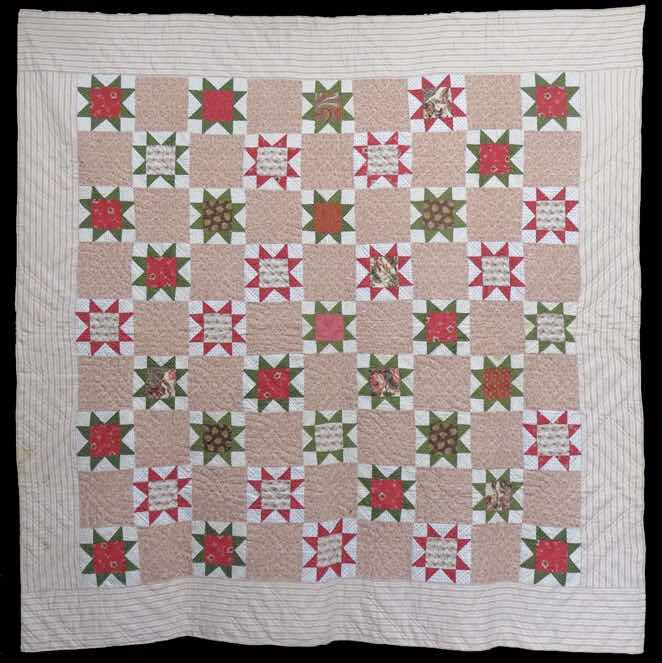
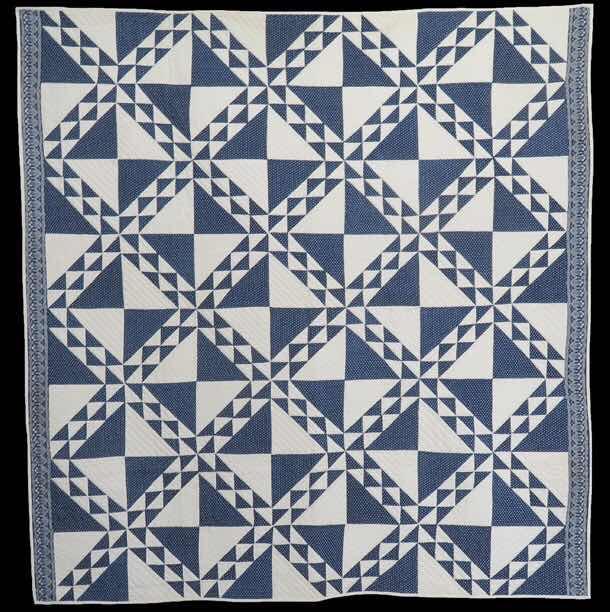
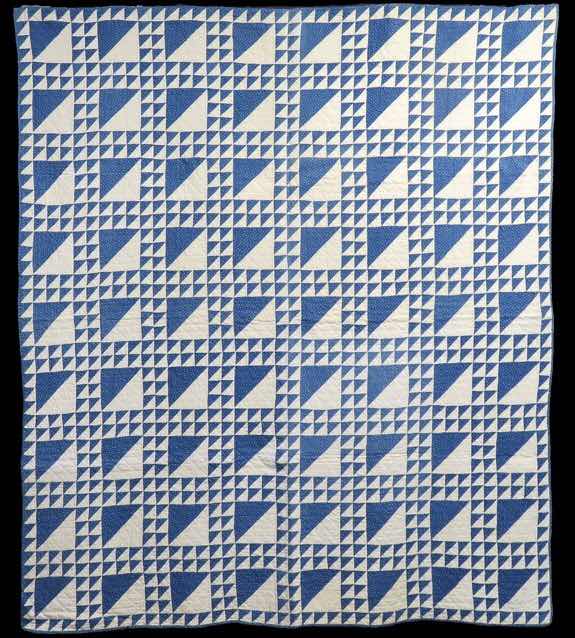
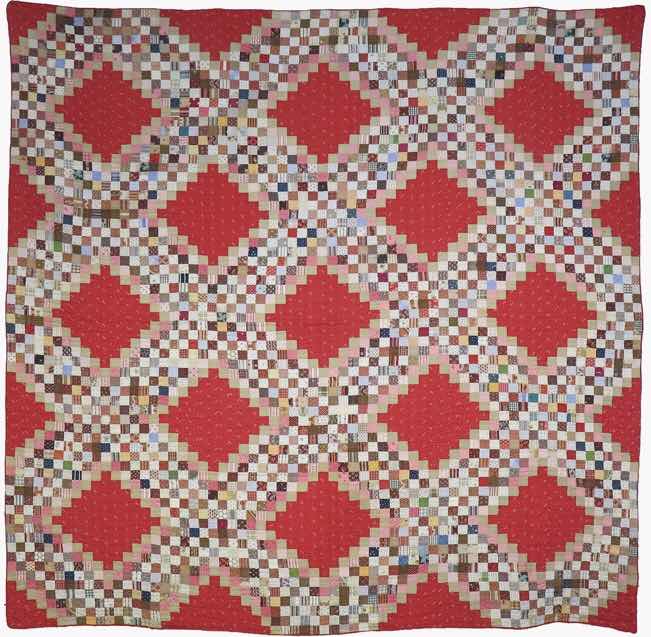
A quilt made in part by well-to-do Eliza Ann Raney in Lebanon, Kentucky, has a similar, and very common story. As a young girl, Eliza Ann attended the “delightful and healthy” Female Academy of St. Catherine of Siena, which in 1853 enrolled about a hundred girls (of many denominations). A tuition of $40 per session paid for “board and washing, including bed and bedding, with tuition in the common branches, viz—Reading, Writing, Arithmetic, English Grammar, Geography, Plain Sewing, Marking, and Needlework.” For an additional $6 per session, “Embroidery, Drawing and Painting in water colors, History, Rhetoric, Botany, Natural Philosophy and Chemistry” were added to the curriculum. Back home, Eliza was putting her needlework skills to use piecing a quilt when her family offered hospitality for the night to a couple traveling from Tennessee. Her work was admired and the wife promised to send the girl a new pattern—the Rose of Sharon. The pattern duly arrived, and according to the family history Eliza cut and stitched the appliqué work herself. The backing and quilting, however, was done “by slaves at night by candlelight.”
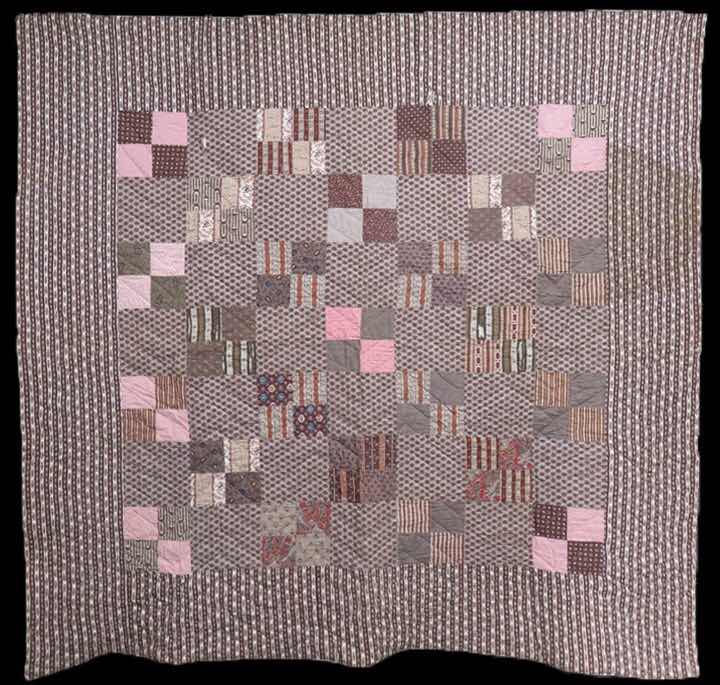
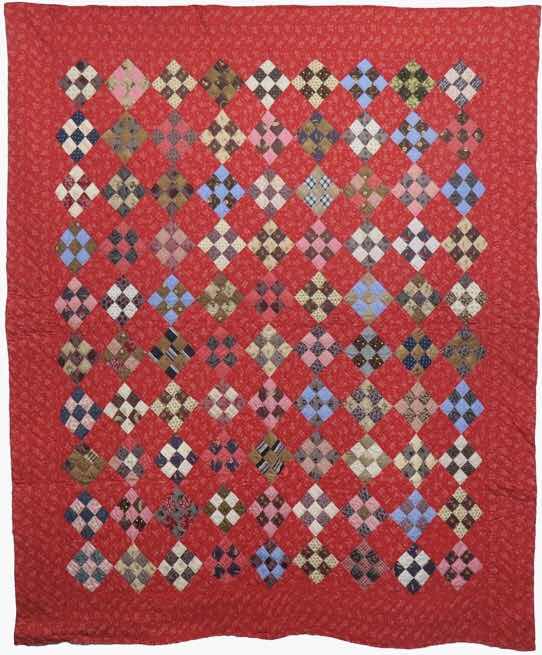
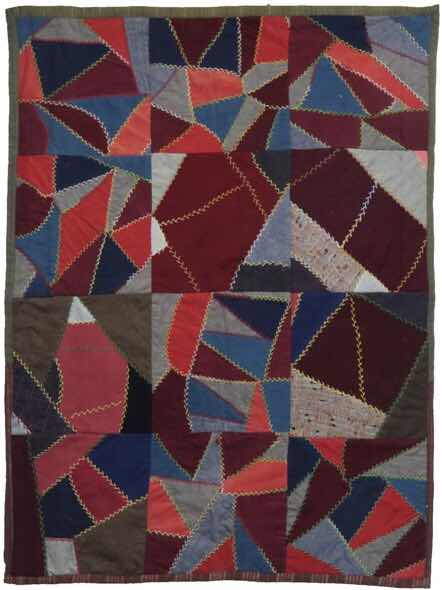
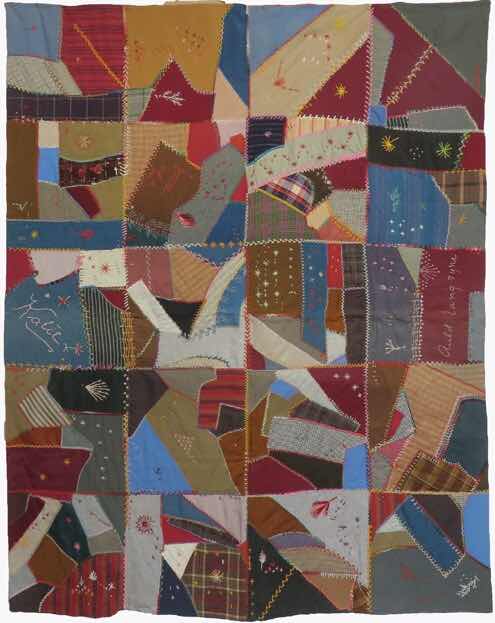
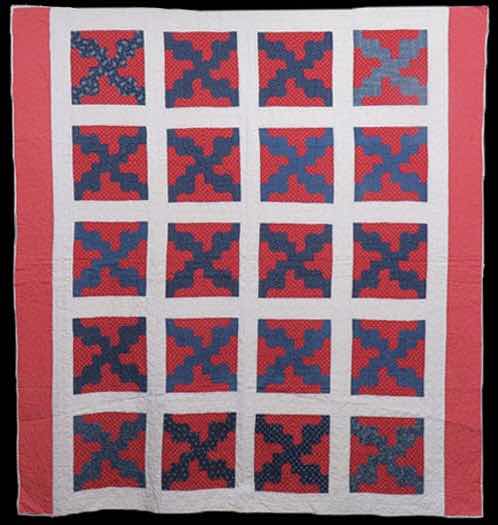
Quilting after dark suggests that the slaves had daytime duties, either in the field or around the house, which took precedence over fancy work but did not preclude it—sewing was not their only occupation. These quilters stitched fine and even rows; this was not the haphazard work of unskilled laborers for basic utilitarian needs but of accomplished needleworkers for a showpiece. Their names, however, were not recorded. The makers of the quilt made by the slaves of the Bushong family in Tennessee, however, did hold a place in the family memory. Philip and Mary Elizabeth Bushong owned three female slaves in the 1860 census. One of them, Rosey, died in her teens in 1864. Sarah (dates unknown) and Martha (1832–1867) pieced this quilt for their own use, but it passed into the Bushong family after their deaths. The two women chose to stay on the Bushong farm after emancipation. The fabric scraps they used were probably of their own spinning and weaving, as they were known to have produced cloth for the family, but they may not have worn these fabrics themselves.
Not much more is known of Sarah and Martha, and nothing at all is known of the anonymous enslaved women and men who crafted many textiles and clothing. Their textile legacies, however, link us to their daily activities, skills, and pursuits. If the features of those anonymous workers were not captured in paintings or photographs, the surviving objects do at least suggest the hands that made them.
The cursory survey of surviving memoirs, correspondences, and other documents presented in this article reveals a rich and complex system of the production of and trade in slave cloth and clothing. More comprehensive research of surviving antebellum plantation and manufacturing records may illuminate in even greater detail the interactions among producers and consumers, as well as the hidden world of the enslaved artisans whose skills with the spindle, loom, and sewing needle were an integral part of the antebellum South.