
I got tired of buying over priced sprays and adhesives for my quilts and decided to make my own. There is no concern whether any of these products will wash out and they're very cheap.
Laundry starch has been used for centuries to keep clothes clean. Dirt and sweat clung to the starch and was easily washed away with it. Heat pressing with starch gives clothing its stiffness. The Chinese began using rice starch and the hot press method 1,000 years ago. Pans filled with hot coals were pressed over stretched cloth. Some time around 1440, the nuns of Syon Abbey used the roots of starchwort (arum maculatum) to starch altar cloths and other church linens. By the 15th century, starch was made by boiling glutinous wheat bran in water and fermenting it for three days. Clothing was dipped in the water, dried and then, polished with a slickstone and a smoothing board. Viking women used glass smoothers and were often buried with them. The Italians used soapstone while terra cotta was used in the Middle East, France and the Netherlands. Metal "sad" irons were introduced by blacksmiths in the Middle Ages. Two irons were used: one for pressing while the other was heating on the hearth. These irons were coated with beeswax to prevent them from sticking to the starched cloth. The wax was later added to the starch. Cooking fat or tallow was added for gloss and salt was added to make the iron glide smoothly.


Colored starched came into use during the 17th century. The first and still popular was blue to counteract yellow dinginess and brighten whites. The original formula by Reckitt's was indigo mixed with starch. In the 18th century, Prussian blue (ferric ferrocyanide) was discovered and used in Mrs. Stewart's Blueing which is still available. Ultramarine was discovered in the 19th century. Ecru starch became popular during the Victorian era for washing blonde lace and beige or cream colored clothing.


Potato starch was introduced in the 18th century so that expensive wheat wouldn't be wasted on laundry. Cornstarch was marketed in the 19th century for its whiteness and advertised as glossy to distinguish it from cooking starch. Even today, glossy laundry starch and cornstarch for cooking are manufactured by the same Argo company. Though potato and corn starches are cheap and readily available, rice and wheat starches are preferred because they stick to fibers better.
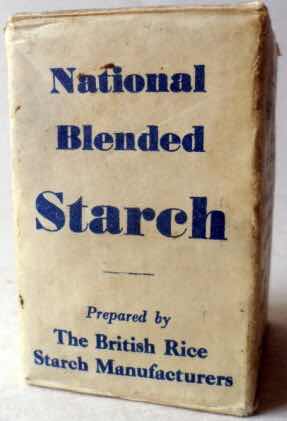

This box of rice starch is from 1930 when it had to be boiled.
This practice continued until the mid-1930s. Watch the video above of a 1936 ad for Quick Elastic starch. It mentions not having to add wax to the starch. Quick Elastic was so named because it was wheat based.

Starch manufacturers added borax to their ready mix formulas to replace the tallow used for gloss. It also heated the formula removing the need for boiling. Borax is a mineral and natural flame retardant. Welding flux slides right off of it. Old welders still swear by starching their welding shirts not realizing that borax is no longer an ingredient used in starch. Welding clothes should be soaked in borax water and air dried.


Potassium sorbate is a mold, yeast, and anaerobic bacteria inhibitor that is widely used in food and cosmetics. It is further enhanced by a chelating agent. It's available from Making Cosmetics.


Citric acid is a chelating agent that is antimicrobial and antioxidant. An antioxidant prevents a formula from oxidizing and darkening when exposed to air. It is not a preservative and should not be used as such. Also available from Making Cosmetics.

Germall Plus is a broad spectrum liquid preservative that retards mold and mildew growth in liquid applications. Its active components have been solubilized in propylene glycol, making them easy to incorporate into formulations. Germall Plus is heat sensitive and should be added at a temperature of 122°F or below. Stable in pH 3-8. Available from Lotion Crafter.

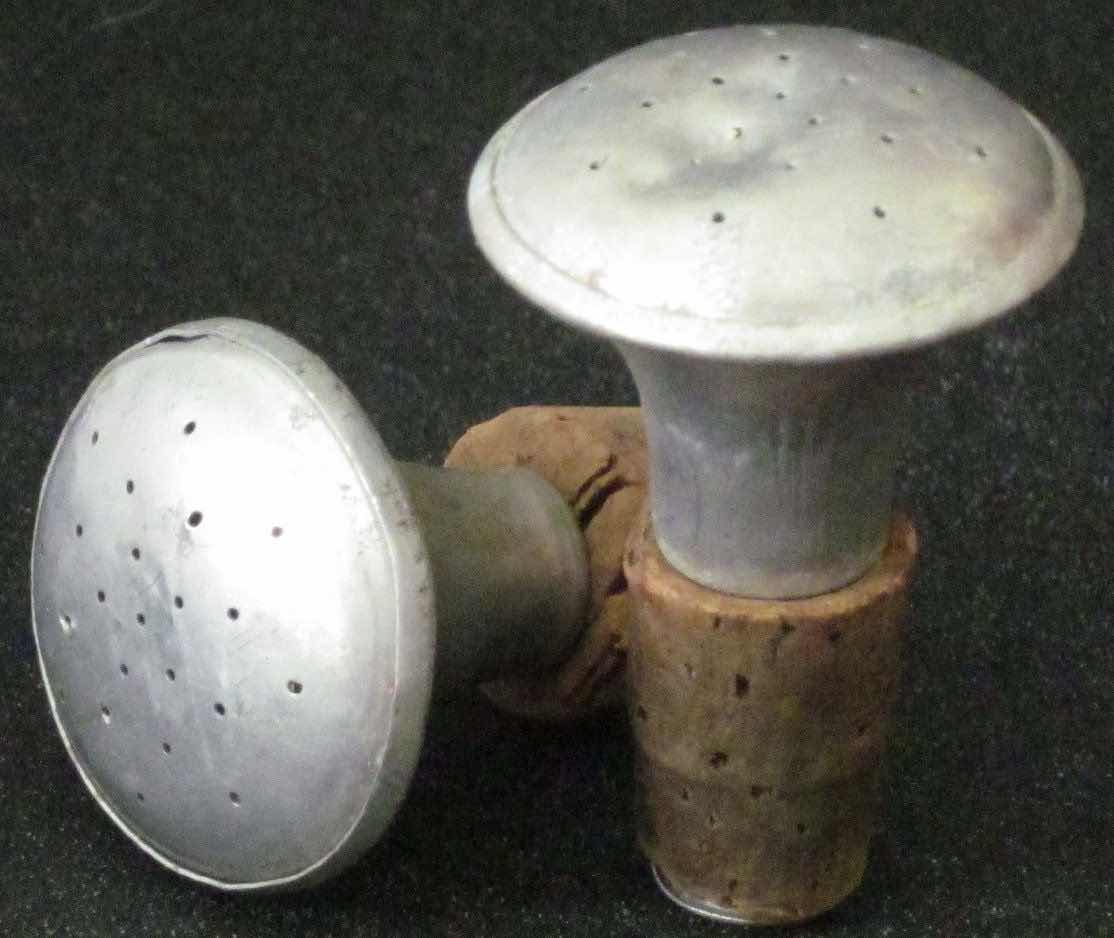

My great grandmother used a laundry sprinkler with a Coke bottle. This is what all the women used in her day. Some of them were pretty ornate. Calcium deposits in hard water would clog a sprayer. They're still available from Lehman's for $3.99.

Continuous Mist Sprayers mimic the aerosol and micro mist action of pressurized cans. Get them on Amazon for $12.94 each.

Ironing Spray Bottles are best suited for thick gels. They're available in the laundry section of Walmart.

Rice Starch
1 C. Glutinous white rice
1 C. Water
Soak rice in room temperature water overnight uncovered on the counter. Strain the liquid through a coffee filter and continue with the recipe.
1-1/2 C. Cold water
1 C. Rice starch
1/8 tsp. each Potassium sorbate and citric acid
5 drops of Germall
Mix cold water with starch. Add preservatives. Pour in a sprayer and shake to combine.
I recommend freezing in an ice cube tray because it has a very short shelf life. Store cubes in a plastic bag and thaw as needed.


Quick Rice Starch
2 oz. Rice starch
1 pint Cold water
1/8 tsp. each Potassium sorbate and citric acid
5 drops of Germall
Mix cold water with starch. Add preservatives. Pour in a sprayer and shake to combine.
Rice starch is still available as Kershaw's Traditional Laundry Starch.

Wheat Starch
1 C. Whole Durum wheat (used for Italian pasta). Do not use flour.
1 C. Water
Soak wheat covered in room temperature water for three days to ferment. Strain the liquid through a coffee filter and continue with the recipe.
2 oz. Wheat starch
4 Tbsp. Cold water
2 pints Boiling water
3 pints Cold water
1/8 tsp. each Potassium sorbate and citric acid
5 drops of Germall
Mix starch with water until it forms a smooth paste. Add 2 pints boiling water, stirring constantly. Add 3 pints of cold water while stirring. Add preservatives. Pour in a sprayer and shake to combine. This is the formula for table linens. If less stiffness is required, dilute with more cold water. Use solution while warm.
Storage is not recommended.

Potato Starch (Faultless)
Faultless is potato based. This is the stuff that leaves flakes. The sizing sold in cans is the same starch of a lighter formula and a different label, but it shouldn't be. Sizing is actually methylcellulose and it has a one week shelf life without a preservative.
1 Russet potato
1 C. Water, divided
Line a colander with two layers of cheesecloth, and place the colander over the bowl.
Grate the potato, using the smallest set of holes on the grater, into the cheesecloth.
Fold the ends of the cheesecloth up and over the potatoes to cover.
Press down on the cheesecloth until the starchy liquid from the potatoes drains into the bowl.
Open the cheesecloth and pour 1/2 cup of water over the potatoes.
Cover again with the cheesecloth and squeeze the potatoes to drain into the bowl.
Repeat steps 5 and 6 with the remaining 1/2 cup of water.
Place two cans on top of the cheesecloth and leave them for 1 to 2 hours to squeeze more starch from the potatoes.
Remove the colander and discard the cheesecloth with the potatoes.
Carefully pour the liquid into a separate bowl without disturbing the starch that has settled at the bottom of the first bowl.
Discard the liquid and let the remaining potato starch dry before using.
After the starch is completely dry, it will keep indefinitely in an airtight container.
2-1/2 C. Cold water
1-1/2 Tbsp. Potato starch
1/8 tsp. each Potassium sorbate and citric acid
5 drops of Germall
Mix cold water with potato starch. Add preservatives. Pour in a sprayer and shake to combine.
I recommend freezing in an ice cube tray because it has a very short shelf life. Store cubes in a plastic bag and thaw as needed.
Spray on the right side of fabric and iron on the wrong side. The heat of the iron will pull the starch to the wrong side of the fabric where the flakes will not be visible.
Use a pressing cloth, brown paper bag, or parchment paper to protect your iron and attract flakes.

Quick Potato Starch
2-1/2 C. Cold water
1-1/2 Tbsp. Potato starch
1/8 tsp. each Potassium sorbate and citric acid
5 drops of Germall
Mix cold water with potato starch. Add preservatives. Pour in a sprayer and shake to combine.


Corn Starch (Sta Flo, Niagara)
Sta Flo is corn starch based. Corn starch is translucent, dries clear, and doesn't gum up a needle. However, it will scorch. Corn starch actually comes from boiling the starch out of whole dent corn. It doesn't fully dissolve in water. It contains solids that will always settle. Boiling will thicken it to a paste. Borax is a mineral flame retardant that prevents cotton from catching on fire. Welders depended on it. It's useless for synthetics.
1 C. #2 yellow dent corn (chicken or deer corn)
2 C. Water
1 Tbsp. Borax
1 C. Cold water
1/8 tsp. each Potassium sorbate and citric acid
5 drops of Germall
Boil corn in 2 cups of water until the water is very cloudy. Strain through a coffee filter.
Add borax to 1 cup of cold water and whisk to combine. Pour into the corn water. Allow to cool to room temperature. Add preservatives and stir.
Transfer to a spray bottle. Shake before use. Spray lightly and iron dry.
The Niagara brand contains silicone.
I recommend freezing this starch in an ice cube tray because it has a very short shelf life. Store cubes in a plastic bag and thaw as needed.


Quick Corn Starch
1/4 C. Cornstarch
1/2 C. Cold water
4 C. Boiling water
1/8 tsp. each Potassium sorbate and citric acid
5 drops of Germall
Mix cornstarch with cold water in a large bowl. Pour in boiling water while stirring constantly.
Cool to room temperature. Add preservatives and stir.
Pour into a spray bottle.
I recommend freezing this starch in an ice cube tray because it has a very short shelf life. Store cubes in a plastic bag and thaw as needed.
Corn starch is still available as Argo Laundry Starch.


Pressing Solution (Best Press, Starch Savvy)
Best Press is wrongly marketed as a starch alternative. Starch is removed in the process of making vodka from potatoes. Denatured alcohol should be used instead of water in steam irons and clothing steamers to remove wrinkles because it evaporates quicker than water and does not leave a water mark on delicate fabrics like velvet. Water can also cause dyes to bleed. Most dyes are not soluble in alcohol without a wetting agent. If the dye does react to the alcohol, it will evaporate before the dye has a chance to bleed much. Grain alcohol was denatured so it could be sold without a license and to prevent people from drinking it. Denatured alcohol sold in hardware stores today may be wood alcohol or cellulosic alcohol distilled from grass. Vodka is a safe alternative to denatured alcohol.
The essential oil can serve a purpose. Lavender and the Lavender/Thyme blend is an insect repellent that also eases stress and anxiety for the wearer and anyone in close proximity. The Frankincense & Myrrh blend is anti inflammatory and kills bacteria. Spray extra on clothing joints, armpits, crotch and seat. Citrus Grove contains Bergamot oil that is invigorating and uplifting. It’s great for exercise clothing. The other Best Press scents: Peaches & Cream, Cherry Blossom, Tea Rose Garden, Caribbean Beach and Linen Fresh are probably synthetic perfume scents. Feel free to play with essential oils based on their properties and practical uses.
If you omit the oil and alcohol, you're left with vinegar.


Wrinkle Releaser and Fabric Softener: Cleaning Vinegar (6% acetic acid) is a natural wrinkle releaser, fabric softener, all purpose cleaner and stain remover. Pickling vinegar isn't strong enough for this application. Cleaning vinegar is available from Walmart.com. Four Monk's cleaning vinegar is de-scented.
Pressing Solution
2 to 2-1/2 C. Distilled water
2 tsp. Cleaning vinegar
1/2 C. Potato vodka (Chopin or Glacier) optional
2-3 drops Lavender essential oil (optional)
Pour into a spray bottle. Shake before use. Spray lightly and iron dry or hang and stretch out wrinkles.


Fabric Stabilizer (Terial Magic, Perfect Sew and Best Press #2)
The Starch Savvy label lists the ingredients as water, polymer, surfactant, silicone, and a preservative. The surfactant in this case is the non foaming type that acts as an emulsifier to force the silicone to combine with water. The active ingredient is clear pva glue. Silicone is a lubricant that helps the iron glide over the fabric. An ironing cloth, parchment paper or brown paper bag may be used instead of adding silicone.

Polyvinyl acetate or PVA glue. Elmer is the name of the bull on the label. He’s the brother of Elsie, the cow on the label of Borden milk. I use the white version to glue baste appliqués and seams. See casein glue below for a homemade washable version that can be used to bind fabric. It can be used in place of PVA glue in the basting recipe, but the formula will not be clear.

Triton X-100 (Polyethylene glycol octylphenyl ether) is a non foaming surfactant that reduces the surface tension of aqueous solutions. It is also an emulsifier that forces water and oil to combine. It's available on eBay for $18.00/4 oz.

Dimethicone 100 is a low viscosity silicone oil used by the cosmetic industry as a pressing medium, primer, slip additive and emollient. TKB sells it for $4.65 per 2 oz.
2 oz. Elner's clear washable glue
1/4 tsp. Triton
1/8 tsp. Dimethicone
32 oz. Water
Add triton to water and stir. Add dimethicone and stir again. Add glue to water. Stir to combine.
Store in a high viscosity spray bottle, available in the ironing section at Walmart.
Spray until damp and iron dry to stiffen. Stabilizes foundation fabric for embroidery and appliqués.


Temporary Basting Spray and Stencil Adhesive
I hate spray adhesives because the overspray gets on everything. Basting spray also gums up my needle. Artificial adhesives don’t wash out either. They have to be soaked in a solvent that may stain the quilt. The only alternative is a food based adhesive

Xanthan gum is a polysaccharide that is produced by fermenting a bacteria called Xanthomonas Camestris, the cause of black rot on vegetables. It's also a very sticky binder.
Basting Spray and Tack Adhesive
2 C. Distilled Water
1/4 C. Xanthan Gum
5 Drops Germall Plus
Combine the distilled water and xanthan gum, and stir. Add five drops of Germall as a preservative and stir again.
Store in a high viscosity spray bottle, available in the ironing section at Walmart.
Spray lightly on stencil templates or batting. Wait until it becomes tacky and press by hand. Do not heat set.* Works on both cotton and polyester batting. Wash quilt with cold water and air dry to remove adhesive.
*Xanthan Gum loses its viscosity and stickiness when heated. It will melt at 104F. It is flammable and will burn at 176F. The lowest iron setting (230F) is too hot for Xanthan Gum. You could literally set your quilt on fire and burn your house down by heating Xanthan Gum or attempting to heat set this adhesive. HAND PRESS ONLY!!!

Flexible Crochet Stiffener
1 C. Cornstarch
5 C. Water
1 tsp. Cleaning vinegar
1/8 tsp. Potassium sorbate
1/8 tsp. Citric acid
5 Drops Germall Plus
This recipe is the same as the basting glue with more water.
In a saucepan, make a paste with the corn starch and 2 tablespoons of the water (to avoid lumps later on).
Add the rest of the water and stir constantly over a low heat.
When the mixture starts firming up, remove from the heat for a second and beat vigorously with a wooden spoon.
Return to the heat and stir until the mixture is the consistency of Vaseline.
Remove from heat again and add the vinegar. When it has cooled sufficiently, add preservatives and stir.
Store in a mason jar.
Dip crochet in solution and allow to dry.

Fabric Stiffener/Sizing/Paper Mache
Stiffen Quick seems to be methylcellulose because it's almost clear, thin enough to be sprayed and it can be microwaved.

Methylcellulose is used as sizing to treat fabric. This is what we normally wash out of fabric before using it. It is also used on watercolor paper to prevent absorption, for paper mache and wallpaper paste. A thin layer applied directly to paper will make it stiff as cardboard. It's available from Dharma Trading for $15.95. You may also find it in craft stores as Elmer's Paper Mache Art Paste. The powder will keep indefinitely stored in a sealed container. After mixing with water, it will last for two weeks before it begins to rot. It is essentially wheat starch heated with lye water and dehydrated. A well known trade name for methylcellulose is Citrucel so we're already familiar with it. However, I don't think fiber supplements will work because of the inactive ingredients added to it.
2 oz. Methylcellulose
1 Gallon warm water
1/8 tsp. Potassium sorbate
1/8 tsp. Citric acid
5 Drops Germall Plus
Heat a gallon of water to 115 degrees. Pour water into a large plastic bowl. Slowly add Methyl-cellulose stirring constantly with a large spoon. Stir until it is dissolved and appears clear, let rest for 30 minutes for bubbles to rise.
Dip the fabric and soak for 15 minutes. Hang the fabric above the tub and let the excess drip.
Pour the remaining solution into a spray bottle. Add 1/8 teaspoon each of potassium sorbate and citric acid, and five drops of Germall to cold mixture as preservatives. Store unused solution in a sealed jar.
Mold fabric around a form on a paper plate. Microwave in 30 second intervals until dry to the touch.
Remove from microwave and spray with more stiffener. Return to the microwave and heat in 30 second intervals until dry to the touch again. Repeat this process 5 more times.
Remove fabric from the form and set it on the paper plate. Return to the microwave and heat in 30 second intervals until completely dry and stiff.
It may be painted at this point, but do not microwave after painting. The paint will soften the glue, but it will stiffen again after it is dry.
You may hot glue decorations to it, if you wish. Water will soften final products, but they can withstand high heat. Heat setting isn't necessary for paper mache.
--------Glue For Paper--------

Gelatine Glue
1 pkg. Unflavored Knox gelatine
1 Tbsp. Cold water
3 Tbsp. Boiling water
1 Tbsp. Canning vinegar
1 tsp. Glycerin
1/8 tsp. Potassium sorbate
1/8 tsp. Citric acid
5 Drops Germall Plus
Place cold water into a 1/2 pint microwaveable glass jar.
Sprinkle gelatine into water a little at a time and allow to bloom. Mix thoroughly until there are no lumps.
Pour in boiling water while stirring. Add vinegar and glycerin and stir to dissolve.
Allow to cool and stir in preservatives. Place lid on jar.
The glue will solidify and that's okay. Heat it in the microwave at 5 second intervals until it becomes liquid. Use a paintbrush to apply.
This is a tacky glue that is perfect for paper and for gluing paper to wood or glass. It makes lick-and-stick envelopes and reusable jar labels.


Casein glue is an alkaline glue that bonds wood, fabric and paper. It was the original wood glue used by carpenters. It can replace Elmer's glue and Mod Podge in all craft applications. In fact, white Elmer’s glue is polyvinyl acetate mixed with casein. It isn’t boiled so it retains its whiteness. Boiling is responsible for the tan color of wood glue. It's almost impossible to find it commercially unless you know where to look. It's manufactured by a German company and marketed to artists who use it as canvas sizing and paint.
Casein Glue
1 pint Nonfat Milk
6 Tbsp. Canning vinegar
1/4 C. Water
1 Tbsp. Baking Soda
1/8 tsp. Potassium sorbate
1/8 tsp. Citric acid
5 Drops Germall Plus
Pour the milk into a pan and heat the milk on low. Do not let it boil. Add the vinegar slowly while stirring constantly.
When it begins to curdle, remove from heat. Continue stirring until the curdling stops. Allow to sit until the curds settle to the bottom.
Strain the liquid whey through a sieve into a jar. Strain again using a coffee filter. Gently press the filter around the curds to squeeze out the excess whey.
Transfer the curds to a bowl and discard the whey.
Mix the water and baking soda together. Stir it into the curds to neutralize the acid.
A casein material will begin to bubble. After it stops, add preservatives.
Pour into a sealable glass jar or dehydrate into a powder to mix with water.

Wheat Paste Decoupage Glue
3 Tbsp. Wheat starch
Room temperature water
3/4 C. Boiling water
3 Tbsp. Sugar
1/4 tsp. Olive oil (optional for a glossy finish)
1/8 tsp. Potassium sorbate
1/8 tsp. Citric acid
5 Drops Germall Plus
Mix starch with just enough room temperature water to make it runny. Pour the mixture into the boiling water while stirring constantly. The mixture will foam as it boils, so continue stirring. Add more water if it gets too thick to stir. Remove from heat when thick and smooth. Add sugar and stir to make it sticky.
Once the mixture has cooled to room temperature, it will be a gelatinous paste. Optionally, strain through a sieve or pantyhose to remove lumps. Add preservatives.
Store in an airtight container in the refrigerator.
Apply with a brush to paper. Adhere another piece of paper and hold to secure. Apply a second coat of glue covering both pieces. Allow to dry. Also adheres paper to wood. Once used as wallpaper paste.
Cornstarch Decoupage Glue
1 C. Cornstarch
1 Tbsp. White Vinegar
2 tsp. Salt
4 C. Hot Water
1/8 tsp. Potassium sorbate
1/8 tsp. Citric acid
5 Drops Germall Plus
Place all the ingredients in a saucepan, except preservatives. Beat with a whisk until mixture is smooth and has no clumps. Put on high heat and bring to a boil. The mixture will thicken and turn translucent. Remove from heat and allow to cool. Add preservatives and stir. Cool completely and transfer to an airtight container. Can be stored in the refrigerator for 3 months. It will turn to a thick gel. Add hot water and stir until it reaches the consistency you need.

Flour Paper Mache Glue
1 C. Flour
1/3 C. Sugar
1 tsp. White Vinegar
1-1/2 C. Water
1/8 tsp. Potassium sorbate
1/8 tsp. Citric acid
5 Drops Germall Plus
Combine flour and sugar in a saucepan. Gradually add water and stir until mixture is smooth and has no clumps. Pour in vinegar and put on medium heat. Stir until the mixture starts to thicken into a paste. Add preservatives and stir. Cool completely and transfer to an airtight container. Dip paper strips into glue.
Starch Paper Mache Glue
1/2 C. Flour
1 C. Sta-Flo Liquid Starch
Combine the two ingredients. Beat with a whisk to remove any clumps. Dip paper strips into glue.

Water Resistant Fabric Stiffener
Fabri Glaze, Mod Podge Stiffy, and GAC 400 by Golden Paints, are products used to make stiff objects with fabric. It's basically the same as Elmer's Glue All which doesn't wash out, so it can't be used to stiffen appliqués. This method is water resistant but not heat resistant. High heat will re-melt the glue and make it sticky, ruining your project.
1/2 C. Casein glue
1/2 C. Water
Heat a 1/2 cup of glue in the microwave for 15 seconds.
Boil a 1/2 cup of water. Add glue to boiling water. Stir until it is an even consistency. Allow to cool and pour into a sealable jar.
Coat the fabric with a foam brush until it is saturated. If using paper as a form, glue aluminum foil to it. Shape fabric around a form set on a foil lined baking tray. You could also allow the glue to dry until tacky and shape into a box before curing. Allow to sit until stiff.
How to Color Glass
Add a teaspoon of acrylic paint to the casein glue recipe. Place a mason jar on a foil lined baking sheet. Coat the jar with an even layer of glue.
Place in a 250 degree oven and heat set until dry. Brush on more glue, if necessary and heat set again until desired color is achieved.
