
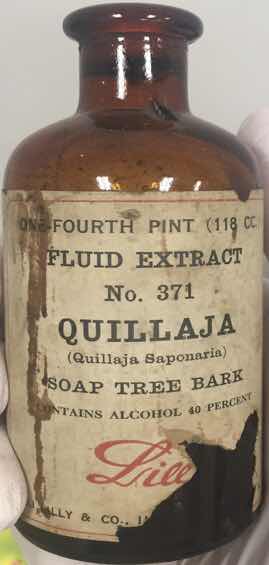
I've also considered how soaps and detergents combined with hard water effect the aging of our skin. Detergents are alkaline and our skin has a pH of 5.5. Medical saponins tend to be pH neutral, so why can't we use these saponins in commercial products that won't harm our skin? The inner bark of the Quillaja saponaria molina, the soap bark tree, contains a glucoside saponin that lathers with water and is antiviral. It has been in the pharmacopoeia since the 18th century, but was abandoned for sodium laurel sulfate. It is being reinvestigated as a sustainable gentle substitute for lye based soap. It is also the source of quilaja extract, a fizzy substitute for carbonation in soda. I stumbled upon a bar soap called Dr. Perry's Clean Thyme made with quillaja extract that has the same pH as skin. There are also liquid hand soaps and shampoos on the market. Every other industry needs to get on board with this. We don't need synthetic surfactants.
I researched different laundry products and discovered they're not all as safe as advertised. Green is safe; blue is optional or unnecessary, but not harmful; purple is harmful with improper handling or to a limited population and red is potentially toxic.
Additives

Washing Soda is Sodium Carbonate or the Sodium Salt of Carbonic Acid. It is a water softener that raises the pH. Washing Soda is so caustic that using too much leaves white stains, fades colors and damages fabric over time.


Borax is Sodium Borate or Boric Acid that is found naturally in evaporate deposits produced by the repeated evaporation of seasonal lakes. In its natural form, it is referred to as Rasorite. Borax is a pH buffering agent. It maintains the pH of a solution by preventing a rapid change when an acidic or alkaline chemical is added to it. It really has no use as a laundry additive. It was once used as a starch additive to help an iron glide easily and add a glossy sheen to clothing. Its primary function in starch was that of a natural flame retardant to prevent the iron from burning clothes. Welders used starch to prevent sparks from igniting their clothing. Flux slides off of it because it's a mineral. Today's starch does not contain borax, so this old wisdom will not work. Clothing or welding blankets must be soaked in a water and borax solution and allowed to air dry.
Detergents
The industry recommended detergent for quilts called simply Quilt Soap is actually sodium lauryl sulfate. It isn't soap at all. It's actually a synthetic surface tension breaker.
Dawn Dishwashing Detergent contains: water, sodium lauryl sulfate, sodium laureth sulfate, lauramine oxide, denatured alcohol, sodium chloride, PPG 26, phenoxyethanol, methylisothiazolinone.
Sodium lauryl sulfate is an additive used to produce foam. It is available as a liquid or powder. SLS is not a cleaning agent though it is labeled as a surfactant. It is actually a mild pesticide and herbicide. This is why Dawn detergent is added to pesticide/herbacide spray concentrates when mixing them with water. It is considered a health hazard that has been linked to cancer, neurotoxicity, organ toxicity, skin irritation and endocrine disruption. 29% SLS solution is available on eBay for $21.95.
Mrs. Meyers Clean Day Laundry Detergent contains: water, lauryl glucoside, laureth-7, sodium methyl 2 sulfolaurate, coconut acid, sodium citrate, subtilisin, amylase, mannanase, lipase, tetrasodium glutamate diacetate, sodium sulfate, sodium chloride, methylisothiazolinone, potassium hydroxide, orange and lavender essential oils. This is the best one, minus the preservative. Seventh Generation is comparable.
Dreft contains: water, sodium borate (borax), disodium diaminostilbene disulfonate, non anionic biodegradable surfactants, anionic surfactants, enzymes, alcohol ethoxylates sodium salt, alcohol ethoxysulfates, pentetic acid, dimethicone, linear alkyl benzene sulfate, alkyl benzenesulfonic acid monoethanolamine salt, ethanolamine, formic acid calcium salt, cellulase, lauramine oxide, protease, sodium formate, citric acid, denatured alcohol, propylene glycol, ethanol, sodium hydroxide, PEG 75 and fragrance.
Woolite contains: water, alkylbenzene sulfonic acid, C12-16 alcohols ethoxylated 7EO, sodium laureth sulfate, sodium hydroxide, coconut acid, triethanolamine, tetrasodium glutamate diacetate, sodium chloride, proprietary inert filler, sodium formate, fragrance, BHT preservative, benzisothiazolinone, and methylisothiazolinone
Stain Removers
LA's Totally Aweome contains: orange oil, ethoxylated alcohol, disodium salt, tetrasodium etidronate, sodium hydroxide, and water. It is advertised as a spot treater, stain remover, and degreaser.
Fels-Naptha contains: soap (sodium cocoate, sodium palm kernelate, sodium palmate, sodium tallowate), water, talc, dipentine, d-limonene, linalool, peg-6 methyl ether, peg 8, glycerin, sodium chloride, pentasodium pentetate, tetrasodium etidronate, benzyl salicylate, fragrance, triclocarban, titanium dioxide, yellow 5, red 40. It is advertised as a laundry bar and stain remover.
OxyClean is Sodium Percarbonate (an adduct of Sodium Carbonate) and Hydrogen Peroxide. It breaks down to hydrogen peroxide in water. This one is completely safe. Sodium percarbonate is the active ingredient in Stain Away denture cleaner.
Disinfectants
Pine-Sol contains pine oil, alkyl alcohol ethoxylates, sodium petroleum sulfonate, and isopropyl alcohol. It's a much safer disinfectant than chlorine.
Aqueous Ammonia is Ammonium Hydroxide in water; it is used for the mercerization of cotton. In particular, it is used for prewashing wool.
Never mix ammonia with chlorine! It causes a chemical reaction and creates toxic gas. Don't mix it with vinegar either. Vinegar is acidic and ammonia is alkaline; they cancel each other out.
Chlorine Bleach is a combination of Sodium Hypochlorite and Sodium Hydrochloride. Its primary use is as a disinfectant for killing germs. It will remove dye from colors and can burn cotton, turning it brittle. Many people are allergic to it.
Fabric Softeners
Fabric softener contains: Diethyloxyester Dimethyl Ammonium Chloride, Benzisothiazolinone, Formic acid, Dimethyl Siloxane, Silicone, Pentasodium DTPA
Dryer sheets contain: Dipalmitoylethyl Hydroxyethylmonium Methosulfate, Clay, Stearic acid, Polyester substrate
Ingredients
Amylase: A human digestive enzyme that dissolves starch or complex carbohydrates and converts it to sugar. May be used for removing starch from fabric.
Cellulase: An enzyme produced by fungi bacteria that improves color brightness, feel, and dirt removal from cotton blend garments.
Coco glucoside: A non-ionic surfactant that can be used as a foaming, cleansing, conditioning, and thickening agent to liquid cleansers and shampoos. It is derived from coconut oil and corn sugar, and is completely biodegradable.
Decyl glucoside: A mild non-ionic surfactant used in cosmetic formularies including baby shampoo and in products for individuals with a sensitive skin.
Denatured alcohol/ethanol: A biodegradable stain and adhesive remover. Made by distilling corn and grain.
Dipentene/d-limonene: A terpene liquid produced by plants that is colorless with a lemon-like odor. It is most commonly used as a solvent in a variety of products. Limonene is produced by lemons and oranges.
Formic acid calcium salt/sodium formate: Stabalizes enzymes in detergent. Used in the dye and printing process as an alkanizer and pH buffering agent.
Lauramine oxide: A foam builder, dye dispersant, wetting agent, emulsifier, lubricant, surfactant, anti-static agent, and viscosity controlling agent.
Laureth-7: A surfactant and emulsifier. Laureth-7 is a synthetic compound obtained by the extensive chemical modification of lauric acid, a natural fatty acid, and oxirane.
Lauryl glucoside: Lauryl glucoside is a dispersant or surfactant that is made from palm oil and glucose from corn.
Linalool: A naturally occurring terpene alcohol with a pleasant scent found in many flowers and spice plants.
Linear alkyl benzene sulfate: A synthetic biodegradable nonionic surfactant.
Lipase: A human pancreatic enzyme that breaks down fat and converts it to sugar. May be used for removing grease stains.
Mannanase: A human digestive enzyme that degrades plant cell wall structures. May be used for removing grass stains.
Pentetic acid/Pentasodium DTPA: A chelating agent that dissolves metal in hard water.
Phenoxyethenol: Phenoxyethanol is used as perfume fixative; an insect repellent; an antiseptic; a solvent, and a preservative.
Pine oil/terpeniol: A phenolic disinfectant that is mildly antiseptic. It is also a sanitizer, mircobicide, virucide, insecticide, and herbicide.
It is effective against Brevibacterium ammoniagenes, the fungi, Candida albicans, Enterobacter aerogenes,Escherichia coli, Gram-negative enteric bacteria, household germs, Gram-negative household germs such as those causing salmonellosis, herpes simplex types 1 and 2, influenza type A, influenza virus type A/Brazil, influenza virus type A2/Japan, intestinal bacteria, Klebsiella pneumoniae, odor-causing bacteria, mold, mildew, Pseudomonas aeruginosa, Salmonella choleraesuis, Salmonella typhi, Salmonella typhosa, Serratia marcescens, Shigella sonnei, Staphylococcus aureus, Streptococcus faecalis, Streptococcus pyogenes, and Trichophyton mentagrophytes.
It will kill the causative agents of typhoid, gastroenteritis (some agents), rabies, cholera, several forms of meningitis, whooping cough, gonorrhea and several types of dysentery.
It is not effective against spore related illnesses, such as tetanus, anthrax, or non-enveloped viruses such as poliovirus, rhinovirus, hepatitis B and hepatitis C.
Potassium hydroxide (caustic potash): The saponification of fats with potassium hydroxide is used to make "potassium soaps," which are softer than sodium hydroxide-derived soaps. Because of their softness and greater solubility, potassium soaps require less water to liquefy, and can thus contain more cleaning agent than solid sodium soaps.
PPG-26: Buteth-26 is a polyoxypropylene, polyoxyethylene ether of butyl alcohol. It is a mild surfactant with skin conditioning properties.
Protease and Peptide: Enzymes that break down protein. May be used for removing food stains.
Proteolytic enzymes (or proteases) refer to the various plant based enzymes that digest protein. These enzymes include the chymotrypsin, trypsin, bromelain (pineapple enzyme), papain (papaya enzyme), fungal proteases, and Serratia peptidase (the “silk worm” enzyme).
Sodium chloride (common salt or halite): Most forms of sodium are chelating agents. Hard water contains calcium and magnesium ions that interfere with the action of soap and contribute to the buildup of a scale or film of alkaline mineral deposits in household equipment and pipes. Water-softening units use ion exchange resins to remove the offending ions that cause the hardness. These resins are generated and regenerated using sodium chloride.
Sodium citrate: the sodium salt of citric acid is an alkalizing agent. It's a safe substitute for washing soda.
Sodium Cocoate/Coconut acid: Coconut Oil is a source of lower chain length fatty acids, including lauric acid, capric acid, myristic acid and palmitic acid. The traditional use of the salts of the Coconut Acid, Potassium Cocoate and Sodium Cocoate is in the manufacture of soap. Also sodium palm kernelate (palm kernel oil), sodium palmate (palm oil), and sodium tallowate (hog lard).
Sodium hydroxide (caustic soda): Used in the manufacture of pulp and paper, textiles, drinking water, soaps and detergents and as a drain cleaner. It is traditionally used in making cold process soap. It was made in the nineteenth century because it was easier to store and transport than liquid.
Sodium methyl 2 sulfolaurate: A surfactant and oil cutting agent derived from coconut oil.
Sodium sesquicarbonate: A double salt of sodium bicarbonate and sodium carbonate that is a water softener and safe substitute for borax.
Sodium sulfate: is the naturally occurring sodium salt of sulfuric acid. It is mainly used for the manufacture of detergents, in the Kraft process of paper pulping, and as a cotton dye mordant.
Subtilisin: Enzyme compound that breaks down proteins. Because many stains contain proteins, the manufacturers of laundry detergents include subtilisin in their product.
Tetrasodium EDTA Disodium Salt: A metal chelating agent.
Tetrasodium glutamate diacetate: A multi-purpose, clear, liquid chelating agent and preservative booster. It is made from plant material, readily biodegradable, with high solubility over a wide pH range.
Dimethicone: A silicon-based organic polymer used to prevent excess sudsing.
Dipalmitoylethyl Hydroxyethylmonium Methosulfate: An anti-static agent synthetically derived from palm oil.
Disodium diaminostilbene disulfonate: An optic brightener that causes white to glow in ultraviolet light.
Glycerin: A humectant. Glycerin is generally obtained from plant (soybean or palm) and animal (tallow) sources where it occurs as triglycerides. The saponification of these triglycerides produces glycerin.
Peg-6 methyl ether/peg-8: An anti-foaming agent and lubricant often combined with glycerin.
PEG 75 (Lanolin Oil/Wax): A surface tension reducer to aid in the emulsification of oil and water in viscous solutions. Comes from sheep wool.
Propylene glycol: A solvent used to dilute fragrance/essential oil and glycerin
Silicone Dimethyl Siloxane: These chemicals coat the surface of textiles with a thin layer of lubrication. This makes the clothes feel smoother and helps them resist the buildup of static electricity.
Sodium petroleum sulfonate: A synthetic cutting oil that is miscible in oil and solvent.
Aqueous Ammonia (Ammonium Hydroxide) is a known respiratory irritant.
Benzyl salicylate: A chemical compound with a floral aroma most frequently used as a fragrance additive or UV light absorber. It is known to cause contact dermatitis.
Chlorine Bleach is a caustic alkali that can cause rashes and burns. It is a known respiratory irritant. Many people are allergic to it.
Diethyloxyester Dimethyl Ammonium Chloride: A fabric softening agent known to cause skin and respiratory irritation.
Sodium borate (borax): A pH buffering agent. Precursor for sodium perborate monohydrate that is used in detergents. It is a respiratory irritant in powder form and in very high concentrations, is toxic. Commonly used as a weak insecticide since 1946.
Sodium carbonate (washing soda): A water softener that raises the pH. It is also a respiratory and skin irritant.
Alcohol ethoxylates sodium salt/alcohol ethoxysulfates: Alcohol ethoxylates and ethoxysulfates are surfactants, used widely in cosmetic and other commercial products. Evidence of chronic aquatic toxicity, DNA, and respiratory effects. One byproduct of ethoxylation is 1,4-dioxane, a possible human carcinogen.
Alkyl benzenesulfonic acid monoethanolamine salt/ alkylbenzene sulfonic acid: A biodegradable benzoic acid compound used as a corrosion inhibitor. Causes serious eye damage and acute aquatic toxicity.
Benzisothiazolinone: A microbicide and fungicide used as a preservative. It is a known human immune system toxicant, and also is classified as irritant for skin, eyes and lungs.
BHT or butyl hydroxytoluene: A fat soluble synthetic compound which is commonly used to preserve foods and cosmetics to slow down the autoxidation rate of ingredients in a product that can cause changes in the taste or color. It has been linked to cancer.
Ethanolamine/triethanolamine: A water alkanizing agent that has been linked to liver cancer.
Fragrance: Synthetic fragrances are a mixture composed of essential oils, synthetic aroma chemicals, and aromatic resins. 95% of the chemicals used in synthetic fragrances include petroleum phthalates, benzene, toluene, and aldehyde. A 2001 study by the Environmental Protection Agency (EPA) found that synthetic fragrances were often shown to contain hormone disruptors linked to abnormal cell reproduction.
Methylisothiazolinone: A preservative that is a known skin irritant, allergen, and neurotoxin.
Sodium lauryl sulfate/sodium laureth sulfate: A surfactant and additive used to produce foam. It is considered a health hazard that has been linked to cancer, neurotoxicity, organ toxicity, skin irritation and endocrine disruption. SLS is not a cleaning agent though it is labeled as a surfactant. It is actually a mild pesticide and herbicide.
Triclocarbon: An anti-bacterial agent used in soap that is a known endrochrine supressor. It also contributes to antibiotic resistance in bacteria. It will soon be banned by the FDA.


