Showing posts with label Watercolor. Show all posts

Thursday, October 15, 2020

Underpainting

Underpainting is a technique the old masters used to make expensive pigments more economical. A wash of red iron oxide was often applied before painting over it with transparent red madder. The iron oxide gave the madder depth and fewer layers were required to achieve good saturation. The same technique is applied to colored pencil for the same reason. Since colored pencil is applied in light layers, the goal of underpainting is to leave no harsh or visible lines. The lightest and most fluid wash is necessary to achieve this effect. Pan watercolor works very well for blocking in large areas like a background. Wetting the paper first helps to prevent lines. I think diluted liquid watercolor in a water brush would work really well. I have a small set of Neocolor II crayons and they are really vibrant. It doesn’t take much to get good saturation. Pencils work well for painting small areas, but they are more likely to leave lines. Use the side of the lead for applying as you would when layering colored pencil to prevent lines. Derwent Inktense isn’t used for underpainting because it dries on the surface of the paper rather than being absorbed into the paper and the binder is shellac which will dissolve with the application of most colored pencil solvents. I don’t recommend markers because you’ll be using the wrong type of paper. The quality of media you use is entirely up to you. Personally, I don’t think the quality or brand matters because you’ll be coloring over it. I recommend using a workable fixative over watercolor containing mica because the mica sits on top of the paper and layering colored pencil over it will cause it to move. Texture fixative is necessary if you want to use mica watercolor over colored pencil for a shimmery effect. So long as the media you choose works for you, that’s what you should use. As always, start with what you can afford while you’re learning.

I tested and compared all of the following brands and media using different solvents. I purchased everything cheap or open stock. I even tested my homemade watercolors. The paper I used is the Strathmore Paint Pad 100 Series. Different paper will give different results. I applied all of the pencils using the side of the lead. Using different pressure or applying multiple layers will also give different results. 
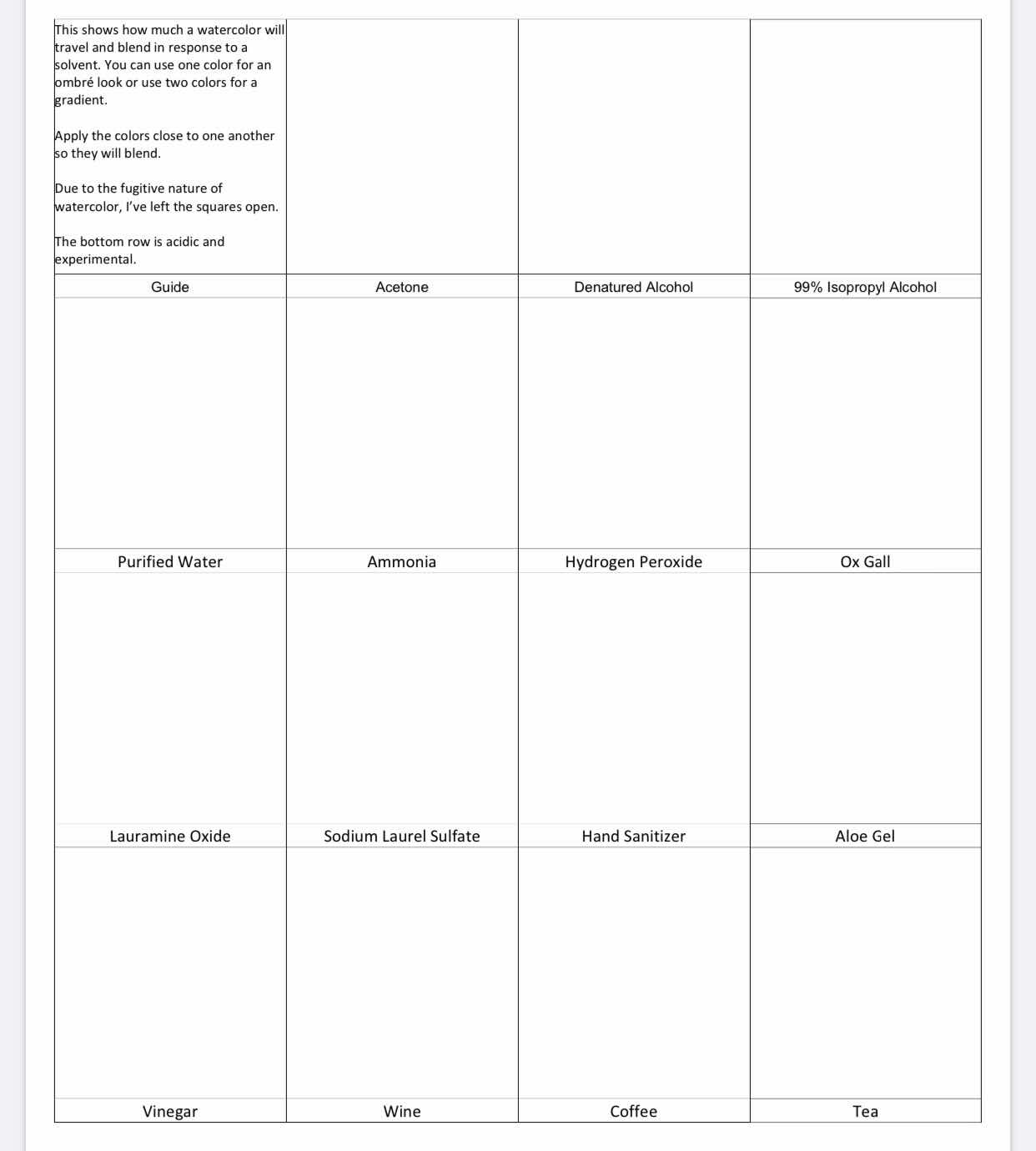
The watercolor blending comparison shows how watercolor travels with different solvents. Does the solvent fully dissolve the media? Do two colors blend to create a new color? Does the solvent dry quickly or slowly? How much solvent was necessary to achieve desirable coverage? Does the media leave harsh lines when it dries? 

The best solvents for each test are in bold red

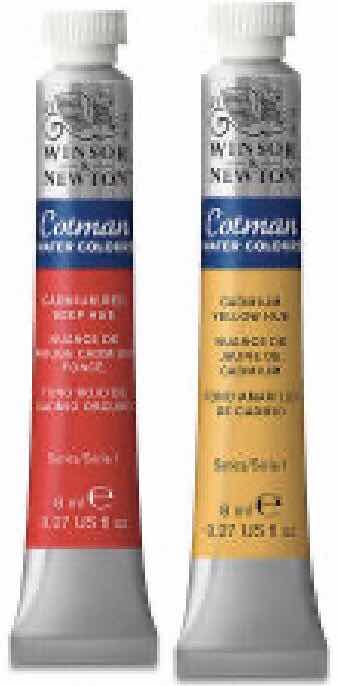
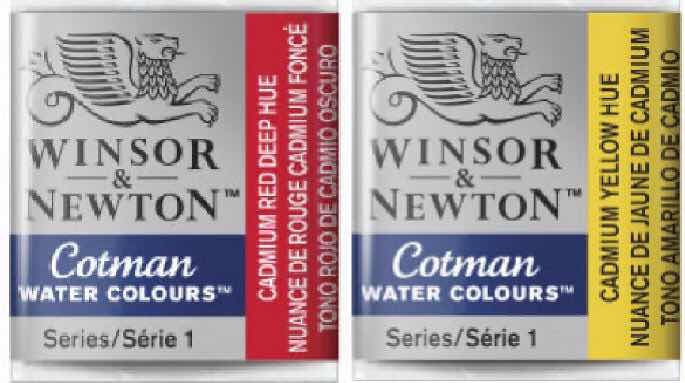
Winsor & Newton Cotman Tubes
Colors tested: Cad Red Deep Hue and Cad Yellow Hue

Cotman, from the makers of Winsor & Newton Professional Watercolors, offers a comparatively inexpensive selection of good-quality watercolors. The Cotman line includes both traditional pigments and reliable synthetic colors that replace some of the more rare and expensive pigments used in the Professional Watercolors.

Winsor & Newton Cotman Watercolors represent superb value and are compatible with acrylics and gouache to produce combinations of opacity and transparency. They have excellent tinting strength. $2.94 for 8 ml at Blick Art. The Cotman line is $10 cheaper than their professional line.
Winsor & Newton Cotman
Colors tested: Cad Red Deep Hue and Cad Yellow Hue

These high-quality yet affordable watercolor pans are lightfast and have excellent tinting strength. They also have good transparency and working properties. $4.19 ea at Blick Art. The Cotman line is $10 cheaper than their professional line.
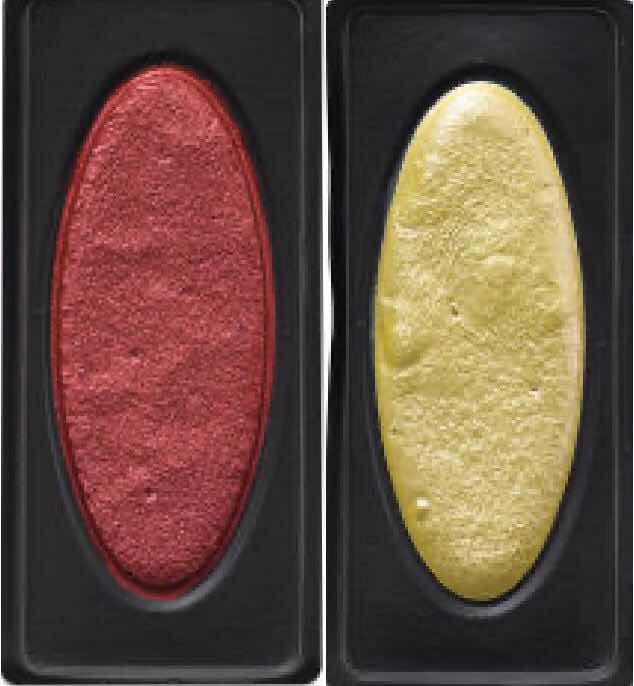
Richeson Collegiate Semi Moist Metallic
Colors tested: Red and Yellow

This 21 set of Yasutomo pearlescent watercolors are available at walmart.com for $4.90 ea. at Blick Art.
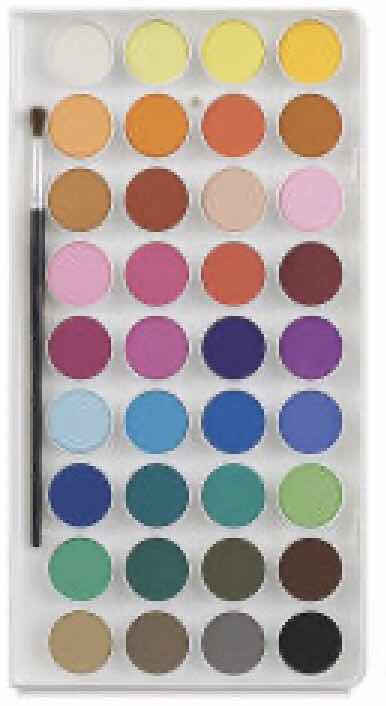
Sargent Art Watercolor Cakes
Colors tested: Red and Yellow

Sargent Art brings the convenience of tempera to the world of watercolor painting. These cakes are brilliant and are offered in an extensive range of colors, giving students lots of exciting creative possibilities. Set of 36 for $9.08 at Blick Art

Crayola Semi Moist Watercolor
Colors tested: Red and Yellow

Crayola Educational Watercolors are bright, economically priced watercolors in semi-moist oval pans are easy to apply to a wide range of surfaces. $8.51 at Blick Art. Refills are available at 6 per color for $3.23.
My homemade watercolor palette contains a variety of translucent paints from commercial tubes, gouache paints from pigment, metallic paints from mica, skin tones from makeup and special color blends. If you followed my DIY Watercolor tutorial, this is the perfect opportunity to test your watercolors.

Water Soluble Crayons
Caran d'Ache Neocolor II Crayons
Colors tested: Scarlet Red and Yellow

Neocolors are soft enough to smudge with your fingertips, yet much firmer than oil pastels. Scrape off one or more layers of color to create an engraved sgraffito effect. They can also be combined with Caran d’Ache Pablo Colored Pencils. Best of all, they’re watersoluble. Set of 84 for $122.24 at Blick Art. Individual crayons are $2.25 here.
Faber Castel Gelatos
Colors tested: Red Cherry and Lemon Yellow

Faber Castell Gelatos are a new type of water soluble crayon made of gel. They are creamy, compact pigment sticks that glide easily onto paper, canvas, wood, and more. Infused with brilliant color, they can be used dry, or dissolved with water to create watercolor effects. Stamping with Gelatos Colors is easy, too. Just apply color to a stamp and apply the stamp to your surface, or apply a field of color and use a stamp to remove it! These acid-free , odorless, lightfast pigment sticks work wonderfully on flocked papers and embellishments, too, to create works of art that last. Their twist-up design keeps hands clean. Available in brights, iridescents, metallics, pastels and translucents. They are purchased in sets like the  Dolce II set of 33 for $46.41from Blick Art. Sets of 4 are $10.45. Sets of 15 are $24.66. There are a total of 52 colors available open stock for $2.45 each from Faber Castell.

Crayola Pearlescent Cream Sticks
Colors tested: Red and Golden Yellow

Crayola Signature Pearlescent Cream Sticks have a smooth formula that makes them perfect for both fine art and craft projects. These versatile art tools work especially well for edging, large area shading, and creating watercolor effects. They can be used dry — or you can add a bit of water for blending. They can be used on a variety of surfaces such as construction paper and painting canvases, even foam board.

The sticks have a creamy texture that helps them glide across surfaces, and the colors show up especially well on dark surfaces where their shimmer and shine really pop. $14.69 at Blick Art.

Pencils

Derwent Watercolor
Colors tested: Crimson Lake and Deep Cadmium

These professional-quality watersoluble pencils offer the freedom to switch from drawing to painting in an instant, with no change in tools. Use them to shade on dry paper, then quickly wash over with brush and water to get a blending effect. Derwent Watercolor Pencils can be used on wetted paper for intensified colors with softened edges, or wet the pencil first to create rich, textured lines. This is the 72 count set of Derwent Watercolor for $98.99 at Blick Art. Individual pencils are $1.64 here.

This is the Professional Aquarel Artist Water Soluble 72 count set for $33.53 on eBay. This is the set that I own and work with. It could be a dupe for Derwent Watercolor because the pencils are nearly identical.
Faber Castel Albrecht Dürer
Colors tested: Deep Scarlet Red and Dark Cad Yellow

Albrecht Dürer pencils contain the highest quality pigments for unsurpassed lightfastness. Color laydown is buttery smooth, and blending is effortless when wet. Color effects become permanent when dry. Albrecht Dürer Watercolor Pencils are part of a unique color matching system that encompasses all Faber-Castell art and graphic products. Match the color index numbers of any two Faber-Castell products for color compatibility. Use them with other Faber-Castell pencils and drawing products in mixed media projects. This is the Faber Castel Albrecht Dürer set of 120 for $64.15 at Blick Art. Individual pencils are $2.34 here.

Cretacolor Monolith Woodless
Colors tested: Perm Red Dark and Perm Dark Yellow

Cretacolor's Aquamonolith Watercolor Pencils are woodless pencils from Austria. They're colored pencils made of pigments and binders wrapped in a thin layer of lacquer. Paint both fine lines and big surfaces with these unique aquarell colored pencils. This is the Cretacolor Monolith Woodless pencil set of 72 for $159.18 at Blick Art. Individual pencils are $2.60 here.
Derwent Graphitint Pencils
Colors tested: Meadow and Ocean Blue

Derwent Graphitint Pencils combine the character of a watersoluble graphite pencil with a hint of color. These exciting new drawing pencils are soft and smooth, and can be blended to produce an endless array of soft hues. Add water and the color becomes more vibrant. Colors can be modified or removed with a soft eraser or a brush and clean water. This is the Derwent set of 24 for $36.13 at Blick ArtIndividual pencils are $2.99. These colors are muted rather than bright. There is no yellow. 
Derwent Water Soluble Graphite Pencils
Colors tested: 2B and 8B

Derwent Water Soluble Graphite Pencils are slim sticks of pure artist-quality graphite combined with premium clays, graphitone can enhance your next drawing project. Use it like a usual pencil for excellent detail or unwrap the easy to peel paper and set the graphitone on its side for broad strokes. Because it is watersoluble, graphitone can be used for line and wash drawings. The set of 4 (2B-8B) for $6.29 at Blick Art. Individual pencils are $2.79.

Water brushes aren't necessary, but they are convenient. Fill them with either water or diluted liquid watercolor. A six brush set sells for $8.99 on eBay.
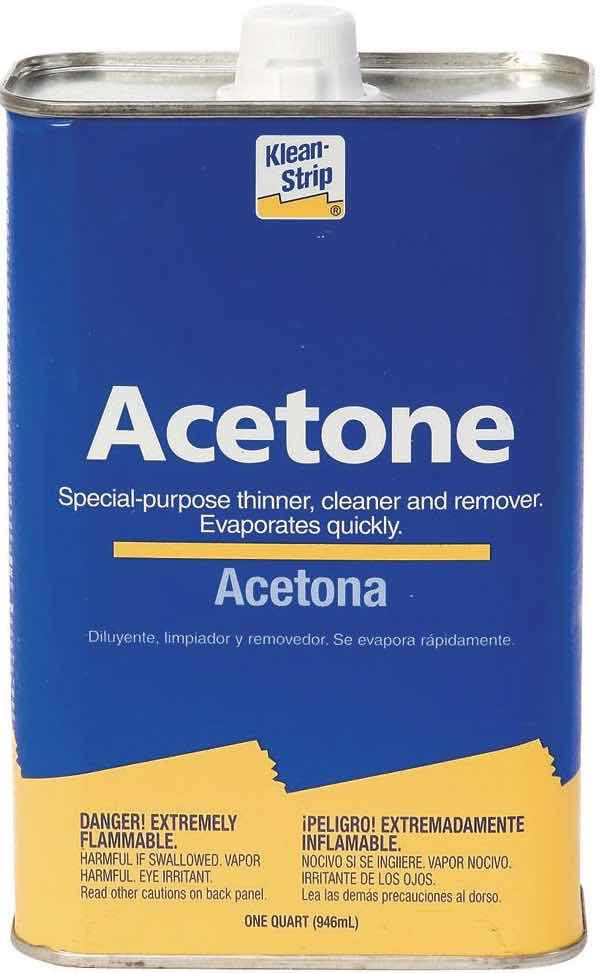
Acetone dries rapidly without residue. I like Cutex Spa Formula. It may be used in place of water when using water soluble media.
Denatured Alcohol is pure ethanol that contains methanol to make it poisonous so people won’t drink it. It may be used in place of water when using water soluble media.

 99% Isopropyl Alcohol is 1% water. Try it with watercolor for more control and less water absorption. 99% alcohol is hard to find on shelves. I get mine from eBay for $8.95/8 oz.

Aqueous Ammonia is Ammonium Hydroxide in water. Use it in place of water or use it to make your water more alkaline to retain your paper’s acid free quality. Never mix ammonia with vinegar. Vinegar is acidic and ammonia is alkaline; they cancel each other out.

3% Hydrogen Peroxide is a mild optic brightener. It may bleach out erased color and whiten the paper where you use it. It is pH neutral and will not damage the paper. Never combine peroxide with ammonia or vinegar!
Ox Gall is the bile from cow bladders. It is a mixture containing cholesterol, lecithin, taurocholic acid, and glycocholic acid. It is a surface tension breaker that allows water to penetrate cotton. It is pH neutral. Ox gall was mixed with wine or grain alcohol and used by traditional watercolor artists to improve paint flow. It's hard to find real ox gall, but I found some on Etsy.
 
 Flow medium or Synthetic ox gall is used to increase the fluidity of watercolor. $9.68 at Blick ArtSynthetic ox gall is sold to watercolor artists because modern watercolor is synthetic. It is used in fabric marbling because real ox gall doesn't work with acrylic. Synthetic ox gall is the non foaming surfactant, lauryl amine oxide. It's available on eBay for $9.25/8 oz.
 
Triton X-100 (Polyethylene glycol octylphenyl ether) is a non foaming surfactant that reduces the surface tension of aqueous solutions. It is used as a wetting agent to pre disperse pigments and force them to mix with water and water soluble solutions. It's available on eBay for $18.00/4 oz. When used as a watercolor Blending medium, it slows the drying of watercolors allowing more time for blending techniques. For maximum effect, dilute watercolors with it. A 2 oz. bottle is $5.66 at Blick Art.
Gum Arabic is a binder for watercolor. It will revert back to resin over time. When used as a painting medium, it increases watercolor brilliancy, gloss, and transparency, giving greater depth to each color. It slows down the drying time of paint, and can also be used for controlling spread when painting wet-on-wet. $6.15 at Blick Ar
Hand Sanitizer is made of alcohol and a gelling agent. The brand doesn’t matter so long as it doesn’t contain any additives or dye. This is about controlling how far the paint travels while evaporating quickly.
Aloe Gel is made of aloe, water and a gelling agent. The brand doesn’t matter so long as it doesn’t contain any additives or dye. This is about controlling how far the paint travels while evaporating quickly.

Vinegar is 5% Acetic Acid and 95% water. It has a pH of 2.5. Vinegar will break down the fibers of wood pulp and cotton. Your paper will no longer be acid free if you use it and therefore, you’re artwork will not be archival quality. It will also prevent the synthetic binder from adhering the paint to the paper. Why use it then? It may be useful for achieving certain effects. Play with it and see what happens. This is all about experimentation. The old masters used acidic materials. Egg yolks are acidic. Wine is acidic. Wood is acidic. Iron gall ink is acidic. Animal hide (parchment) is acidic. The level of acid varies with each medium. Do not mix ammonia with with acidic liquids. You can mix baking soda with them to make them more alkaline.

Wine has a general pH of 3 with light wines being more acidic than dark wines. The experiment here is about how the wine color stains the paper and alters the shade or tint of the watercolor.

Coffee has a general pH of 4.5-6.0 with dark roasts being less acidic than light roasts. The experiment here is about how the coffee stains the paper and alters the shade or tint of the watercolor.

Black Tea has a general pH of 4.9-5.5, just slightly higher than coffee. The experiment here is about how the tea stains the paper and alters the shade or tint of the watercolor.

Gum Arabic powder $7.15/0.25 lb at Kama Pigment. Add gum Arabic powder to wine, coffee and tea to bind it to the paper when using it as a watercolor.

Wine can be boiled down to a syrup because of the sugar present in the alcohol. However, sugar must be added to coffee and tea in order to reduce it down to a syrup. Once a syrupy consistency is obtained, remove it from heat and transfer to a pinch bowl. Add just enough gum Arabic powder to make a thick paste. You can use it as you would tube paint or pour it into a pan and dry it.

Tuesday, November 21, 2017

DIY Watercolor and Pencils

Young Hare by Albrecht Durer, 1502

Watercolor painting dates back to Paleolithic cave paintings and has been used for manuscript illustration since Egyptian times. However, its use as an art medium began with Albrecht Durer who painted several fine botanical, wildlife and landscape watercolors and ushered in the German Renaissance.
Modern watercolor tube paint isn't as pure as it used to be. It contains silicone as a pigment dispersant, white wheat dextrin as a filler, corn syrup in place of glycerin as a humectant, fungicide in place of honey as a preservative, methylcellulose as a plasticizer, and alumina trihydrate as a brightener. The binder is a blend of polyethylene glycol, stearyl alcohol, and polyhydric alcohol. Winsor & Newton also puts boron trioxide in their tube paint and there's no reason for it.
I also discovered from reading Winsor & Newton's fact sheet that watercolor cakes are extruded which tells me that they are mixed as a clay like paste. This can only be achieved by using similar ingredients to make chalk. I know that chalk is responsive to a wet brush. I gather from the above statement, the pigment is mixed with a solution of gum arabic and honey, and then dried. It is then added to the paste and extruded, cut, and glazed with what I assume to be the gum arabic and honey solution. Watercolor and ink pencils would be made the same way, but without the glaze.

Surface Tension Breaker
A surface tension breaker allows water to penetrate cotton. Ox Gall is the bile from cow bladders. It is a mixture containing: cholesterol, lecithin, taurocholic acid, and glycocholic acid. Ox gall is used by watercolor artists to improve paint flow. It's hard to find real ox gall, but I found some on Etsy.
 
 Flow medium or Synthetic ox gall is used to increase the fluidity of watercolor. $9.68 at Blick ArtSynthetic ox gall is sold to watercolor artists because modern watercolor is synthetic. It is used in fabric marbling because real ox gall doesn't work with acrylic. Synthetic ox gall is the non foaming surfactant, lauryl amine oxide. It's available on eBay for $9.25/8 o
 
Triton X-100 (Polyethylene glycol octylphenyl ether) is a non foaming surfactant that reduces the surface tension of aqueous solutions. It is used as a wetting agent to pre disperse pigments and force them to mix with water and water soluble solutions. It's available on eBay for $18.00/4 oz. When used as a watercolor Blending medium, it slows the drying of watercolors allowing more time for blending techniques. For maximum effect, dilute watercolors with it. A 2 oz. bottle is $5.66 at Blick Art.
Gum Arabic is a binder for watercolor. It will revert back to resin over time. When used as a painting medium, it increases watercolor brilliancy, gloss, and transparency, giving greater depth to each color. It slows down the drying time of paint, and can also be used for controlling spread when painting wet-on-wet. $6.15 at Blick Art

Gum Arabic powder $7.15/0.25 lb at Kama Pigment.
  
Raw Honey is a preservative in traditional watercolor. It doesn't matter if it comes with the comb or without it. It's also available in a range of colors from white to dark amber. Try to use white or gold so it doesn't interfere with the paint color. Do not use honey that is sold as a solid or cream. It has royal jelly added.
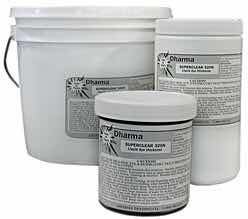
Super Clear high viscosity thickener for tube paint $6.95 at Dharma Trading. It reduces the amount of pigment used for filling a tube.

Cornstarch is an extender/filler for pigment. It adds bulk without modifying the color.

Baking Soda is the hardener for cakes.
Kaolin TKB sells 8 oz for $3.40.

Watercolor Fixative

Only for use on paper, not fabric. Dilute water based clear shellac wood stain 5:1 with water before use. That's 1 Tbsp shellac to 5 Tbsp water. This dilution can be used as a fixative between layers of watercolor. Simply pour it into a spray bottle.
Store individual powders or paint in these clamshells. TKB Trading sells them for $3.25/20 and 20 labels for $0.50. I chose the blue, what they call a "blueberry pie" for fillers and the green "apple pie" for saving any leftover mixed paint or pigment.

These are my fillers.

Refer to my posts: Make Your Own Art SuppliesMakeup, Pigment, Paint and Dye, and Media Molds and Containers for a list of things you will need to complete this tutorial.

Whichever formula you decide to make, it's a good idea to make a wet sample of your pigments, makeup and paints for comparison and organization.
 
This is a "speck". It's literally just a few grains of powder. If you're mixing liquid paint, it equals the amount of paint you can get on the head of a straight pin.

This is what I mean by a Touch and this is how to get it. Swipe the tip of a #61 palette knife across a baby wipe. Dip it into pigment. Don't get too much. It's not an exact measurement, but it's about half a drop, half a small scoop or 2.5 mg.

Watercolor Marker

1 Pinch Pigment
1 ml Triton X-100
7 ml Water

Palette knife #61
10 ml beaker

Pour pigment into the beaker. Add Triton and water and stir well. 

Use a pipette or syringe to fill marker.

I'm impressed with the fine line on paper and the way it performs on fabric. It's non-bleeding on fabric, but it will spread a little. This formula is perfect for layering color. It's best used with a brush tip marker. The one I'm using has a plastic tip.

Watercolor Base

2 Tads Gum arabic
1 Drop Glycerin (humectant)
1 Drop Honey (preservative)
1 Drop Water

Bulk Base Formula

2 Tbsp. Gum arabic
1/2 tsp. Glycerin
1/2 tsp. Honey
1/4 tsp. Water

Tube Watercolor Paint

5 ml Tube

1 Dash Pigment
1/8 tsp Super Clear
5 ml Watercolor Base

10 ml Tube

1 Tad Pigment
1/4 tsp Super Clear
10 ml Watercolor Base

Palette Formula*

3 Pinches Pigment
10 Drops Watercolor Base

Palette knife #61
15 ml beaker

Place pigment in beaker. Add just enough watercolor base to make a thick paste. Blend thoroughly. Store in tubes. *You can obviously mix this formula in smaller quantities as needed. 

This paint is very smooth and easy to work with on paper, exactly as expected. However, it bleeds on fabric.

Cake Watercolor from above Paint

15 mm makeup pan

1/2 ml Paint from above formula
1 Drop Baking Soda

Half Watercolor Pan

1-1/2 ml Paint from above formula
1 Smidgen Baking Soda

Full Watercolor Pan

2-1/2 ml Paint from above formula
1 Pinch Baking Soda

Palette knife #61
5ml beaker
Place paint from above formula in beaker. Add baking soda. Stir with a palette knife until smooth. It will be a thick paste. 

Pour into palette well. Set in a warm place and let dry for a week. 

These cakes are semi hard, smooth and opaque. They moisten easily and are great for bold strokes, layering or glazing. 

They lay down very smooth, just as a real watercolor should. These also bleed on fabric.

Transparent Cake Watercolor from Commercial Tube Paint

1 ml Commercial Tube Paint
3 Dashes Cornstarch
1 Drop Baking Soda
4 Drops Water

Palette knife #61
5ml beaker
Palette

This formula uses the kind of commercial synthetic paint pictured at the top of this post. Squeeze 1 ml of paint into a beaker. Add baking soda and cornstarch. Add water. Stir with a palette knife until smooth. It will be a semi thick liquid.

Pour into palette well. Set in a warm place and let dry overnight. If the paint settles too much, mix another batch and pour over it. 

These cakes are hard, smooth and translucent. They moisten easily and are great for bold strokes, layering or glazing. 

These bleed on fabric as well.

Translucent Cake Watercolor from Lake Dye

1-2 Drops Powder Dye*
1 Drop Glycerin
3 Dashes Corn Starch
15 Drops Watercolor base

*Dye is a pigment that has been altered by mineral salts to intensify the color. Baking soda doesn't work with lake dye because it reacts with the mineral salts. It is very hydrophobic and has to be wetted with glycerin. When adding white or black, do it after adding cornstarch. Ferric ferrocyanide (Prussian Blue) does not blend with white.

Palette knife #61
5ml beaker
Palette
 
Place pigment in beaker. Add glycerin to wet. Add watercolor base and stir. Add cornstarch and stir again. It will be a thick liquid. 
Pour into palette well. Set in a warm place and let dry overnight. 
  
These cakes are semi hard, highly pigmented, and translucent. 
 
They moisten easily, bleed, and stain everything.

Gouache Cake Watercolor from Pigment

1 Dash Pigment
3 Dashes Corn Starch
1 Drop Baking Soda
15 Drops Watercolor base
5 Drops Water

Palette knife #61
5ml beaker
Palette

Place cornstarch and baking soda in beaker. Add pigment and stir. Add watercolor base and water, and stir again. It will be a thick liquid. 

Pour into palette well. Set in a warm place and let dry for a week. 

These cakes are hard, opaque, and very matte. They need to be pre moistened and have excellent coverage. 

They bleed on fabric, but stay true to color.

Portrait Formula

This section accompanies my portrait recipes. Mix the recipe you want to use first and store it in a clamshell. Because pigments are more intense when wet, you need to dilute the recipe with white. How much white you add determines how light or dark the formula will be. Test the color after each addition.

3 Dashes Cornstarch
1 Drop Baking Soda
1 Drop Portrait Recipe
1-3 Drops Titanium Dioxide
15 Drops Watercolor Base
5 Drops Water

Palette knife #61
5ml beaker
Palette
 
Place cornstarch, titanium dioxide and baking soda in beaker. Add pigment and stir. Add watercolor base and water, and stir again. It will be a thick liquid. 
Pour into palette well. Set in a warm place and let dry for a week. 
 
These cakes are semi hard, opaque, and very matte. They moisten easily and have excellent coverage. 
 
They're also non-bleeding on both paper and fabric.

Cake Watercolor from Face Powder, Blush, and Bronzer

For this section, I used Elf and Avon face powder, blush, and bronzer. I was an Avon rep so I had samples. I recommend purchasing cheap palettes or loose powder from BH Cosmetics or Light in the Box. Use the highlight and contour palette to make light and shadow colors.

Porcelain = Avon Translucent + 1 Drop White (Warm)
Fair = Elf Fair (Cool)
Light = Elf Light (Neutral)
Neutral = Avon Neutral (Neutral)
Medium = Avon Light Medium (Warm)
Golden = Avon Medium Deep (Warm)
Russet = Avon Light Bronze Bronzer (Cool)
Soft Olive = 1 Dash Medium Deep + T. Dark Brown Oxide + S. Black (Neutral)
Chestnut = Avon Mocha + T. Dark Brown Oxide (Warm)
Ebony = 1 Dash Mocha + 1 Drop Dark Brown Oxide + S. Blue + S. Black (Cool)

Blush

Soft Pink = Elf Innocence (Soft Pink)
Soft Rose = Avon Rose Lustre
Classic Aura = Avon Classic Aura
Soft Plum = Avon Perfect Plum
Soft Cranberry = Avon Cranberry
Soft Mauve = Avon Blushing Mauve
Natural Glow = Cover Girl Natural Glow
Earthen Rose = Avon Antique Rose
Golden Glow = Avon Golden Glow
Copper Glow = Avon Copper Glow

3 Dashes Powder
1 Dash Calcium Carbonate*
3 Drops Baking Soda
15 Drops Watercolor Base
5 Drops Water

*Face powder and blush contain cornstarch and magnesium myristrate which are very soft. Calcium carbonate adds density to these soft powders. The extra baking soda hardens it.

Eyeshadow palette or
Square or Round makeup pans and
Z palette
Palette knife #61
Mini sieve 
Silicone bowl
Mini spatula
5ml beaker

Follow the procedure in the eyeshadow section below for removing pans from palettes and grinding pressed powder if not using loose powder. 
 
Place powder in beaker. Add calcium carbonate, baking soda and watercolor base and stir. It will be a thick liquid. 
Pour into palette well. Set in a warm place and let dry for a week.
 
These cakes are semi soft and moisten easily. The coverage is translucent and shimmery on paper. They're great for layering and glazing. 
 
On fabric, they're opaque and non-bleeding.

Cake Watercolor from Eyeshadow

1 Dash Eyeshadow
3 Dashes Cornstarch
1-2 Drops Baking Soda*
15 Drops Watercolor base
5 Drops Water

*The mica in eyeshadow makes the cake too soft, so it benefits from the extra baking soda. Matte eyeshadow only needs 1 drop.

Eyeshadow palette or
15mm Square or Round makeup pans
Z palette (optional)
Palette knife #61
Mini sieve 
Silicone bowl
Mini spatula
5ml beaker
I own a 180 color palette that I got on eBay for $11.30. Thirty eight of the 180 colors were duplicates. There were also both matte and shimmers, that were the same color.

Remove the pans from the palette. An easy way to do this is to gently heat the bottom of the palette. Place the palette face down on a piece of cardboard. Place a towel over the plastic and heat the towel with an iron. The heat will loosen the adhesive. Place one hand under the cardboard and rest the other hand on the towel. Turn the palette right side up. 
 
Insert a palette knife into the powder flush with the edge of the pan. Hold it by the blade and apply firm pressure. Turn the pan clockwise until it pops up. Wash and dry the palette. It isn't necessary to reuse the pans. I didn't use mine. Tin pans are only necessary if you're using a magnetic palette. Most commercial pans are aluminum and will not stick to a magnet.
Arrange the pans according to color. The pans on the bottom left are duplicates. Decide which color range you want to expand. I expanded mine using pigments because I wanted my primaries to be pure.
Run the palette knife around the inside edge of the pan. Pop the powder out of the pan into a sieve. 
Use the spatula to crush the powder and scrape it through the screen.
The powder will be a little coarse. If you want it any finer, scrape it through a fine paint strainer or grind it.
Pinch the bowl and pour the powder into the beaker. 
Add baking soda and cornstarch. Stir to combine. Add watercolor base. It will sit on top of the powder.
Mix thoroughly with the palette knife. It will be a thick paste. 
Pour directly into the palette well. Wash the spatula, bowl, and sieve with soap and water after each use and towel dry. Set in a warm place and let dry for a week.

These cakes are soft and moisten easily. The coverage is translucent and shimmery on paper, except for mattes. They're great for layering and glazing on paper. 

On fabric, they're opaque and non-bleeding.

The old masters used acidic materials. Egg yolks are acidic. Wine is acidic. Wood is acidic. Iron gall ink is acidic. Animal hide (parchment) is acidic. The level of acid varies with each medium. Do not mix ammonia with with acidic liquids. You can mix baking soda with them to make them more alkaline.

Wine has a general pH of 3 with light wines being more acidic than dark wines. The experiment here is about how the wine color stains the paper.

Coffee has a general pH of 4.5-6.0 with dark roasts being less acidic than light roasts. The experiment here is about how the coffee stains the paper.

Black Tea has a general pH of 4.9-5.5, just slightly higher than coffee. The experiment here is about how the tea stains the paper.

Wine can be boiled down to a syrup because of the sugar present in the alcohol. However, sugar must be added to coffee and tea in order to reduce it down to a syrup. Once a syrupy consistency is obtained, remove it from heat and transfer to a pinch bowl. Add just enough gum Arabic powder to make a thick paste. You can use it as you would tube paint or pour it into a pan and dry it.
  
Eyeshadow palettes come with acetate sheets. Using an overhead projector marker, label each color with a number. 

Write a numerical legend with the pigment or paint name of each corresponding color. I used XL spreadsheet for this. Brush some paint beside each number. Spray acrylic sealer on the legend and allow to dry. 

If you're using makeup, you will eventually run out of a color and have to duplicate it with pigment. Over time, you will have a palette of pure pigment watercolors just like mine.

Children’s Watercolor

4 Tbsp. Baking Soda
2 Tbsp. Vinegar
2 Tbsp. Corn Starch
1/2 tsp. Corn syrup
6 Drops Wilton coloring gel or homemade

Bamboo skewers
Wooden spoon
4 cup measuring glass cup
Mini Muffin tin or silicone ice cube tray
Baby oil or coconut oil

Coat the wells of the muffin tin with a bit of oil. Place baking soda in the measuring cup. Add vinegar. It will foam up. Stir with a skewer. It will get thick. Add corn syrup and cornstarch and stir with a spoon. It will be a very thick paste. Fill each well 3/4 full. Add food coloring and stir with a skewer to combine. Set in a cool place and let dry for 24 hours.

These cakes are soft, slightly tacky and translucent. They moisten easily, bleed, and stain everything.

Watercolor Lead, 2mm x 3-1/2"

1 Drop Pigment
3/4 tsp. Gum Arabic powder
2 Drops Water

Watercolor Lead, 4mm x 3-1/2"

2 Drops Pigment
1-1/2 tsp. Gum Arabic powder
5 Drops Water

Watercolor Pencil, 6mm x 3-1/2"

1 Smidgen Pigment
3-1/2 tsp. Gum Arabic powder
10 Drops Water

Watercolor Stick, 3/8 x 3-1/2"

1 Pinch Pigment
2-1/2 Tbsp. Gum Arabic powder
15 Drops Water

Beaker or Condiment cup
Plate glass
Palette knife #61 & 62
Clay extruder
Oral syringe
4mm die
6mm die
8mm die, bored to 3/8"
Corrugated paper, either size
Spray adhesive
Wax paper

Cut the paper to 3-1/2" wide. Spray with adhesive. Place wax paper over the adhesive and push it into the grooves with a wooden dowel. 

Place Gum Arabic powder into a condiment bowl. Add water to make a paste. Transfer to plate glass. Add enough kaolin to make a dough. Blend thoroughly with the #62 palette knife.

Pack the dough into the syringe or clay extruder. Extrude the dough into the grooves of corrugated paper to harden and cure.