Showing posts with label Fabric Painting. Show all posts

Saturday, December 3, 2016

DIY Acrylic Paint


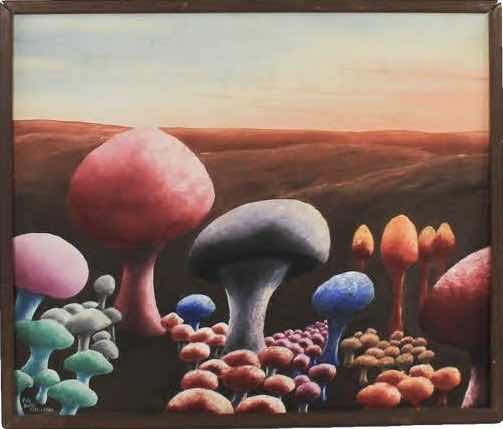
Mushrooms by Pete Dolle, 1963

Acrylic paint was a natural evolution from soft distemper, retaining the idea of using a glue binder for painting on porous surfaces.

Polymer emulsion paints have a short history, which began in late 1948 with the development of polyvinyl acetate emulsion (PVA), commonly known as white glue. However, PVA was too sensitive to water and heat, and the paints made from it were not durable for canvas or house painting. The acrylic polymer emulsions now used in artists’ paints are a byproduct of the attempt to develop a new type of house paint during the early 1950s. The first artists’ acrylic polymer paint became readily available in North America around 1963 and in Europe about two years later.

Acrylic paint is the suspension of polymers in a liquid. As the liquid evaporates, the suspended polymer solids come closer together until they touch and combine to form a waterproof film. If a polymer emulsion is applied to a nonoily, absorbent surface, it will remain permanently attached. A paint can be made by pigmenting a polymer emulsion.

Several additives are needed to produce a workable paint. The polymer solids must be coated with emulsifiers to prevent them from binding together before the liquid evaporates. Dispersants are necessary to keep the pigments that are added from clumping together and/or settling out of the liquid. Antifoaming agents are needed to prevent the surfactant from foaming during the application of a paint so that the dried paint film doesn't crack. Wetting agents, such as vegetable glycerin or propylene glycol, are used to regulate the drying time, allowing sufficient time for mixing and applying the paint. Thickeners are used to transform the milky quality into a paintlike consistency. And last but not least important, a preservative is added.

The color range of polymer paints is limited for two reasons. The first concerns pH. Alkaline-sensitive pigments cannot be used in the manufacture of acrylics because acrylic emulsions are alkaline. Acid-sensitive pigments cannot be used in vinyl paints because vinyl emulsions are acidic. The second reason is that in polymer emulsions, subtle differences between similarly colored pigments often cannot be seen and are therefore pointless to manufacture.
  
Liquitex Matte and Gloss Gel are thick acrylic emulsions. Use them to make an opaque matte or gloss heavy body acrylic paint. May be thinned with up to 25% water. Available from Blick Art for $8.81/8 oz
  
Golden Soft Gels are used for making transparent soft body paint. They're available as matte, semi gloss, and gloss. Available from Blick Art for $11.54/8 oz.
  
Liquitex Matte and Gloss Medium are thin acrylic emulsions. Use them to make an opaque matte or gloss fluid or high flow acrylic paint. Available from Blick Art for $8.51/8 oz.
Elmer's Glue All, also known as PVA glue is transparent and permanent when dry.

Additives

Additives play an important role in the formulation of artist's paint. The ratio for additives is generally 5:1. That's 5 smidgens of additive to 1 smidgen of pigment. It is unfortunate, however, that today's paint manufacturers abuse these additives by adding large quantities of them to tiny amounts of cheap pigment and lake dyes and sell it at inflated prices to convince artists that their paint is a higher quality than it really is.
 
Alumina hydrate is an extender that is used with expensive pigments. It is a crystal that reflects light and color. It gives the illusion that the pigment is distributed over a larger area than it really is. It is also an optical brightener that intensifies the saturation of dull pigments. Historic minerals such as lapis would be cost prohibitive without the addition of an extender. $2.91/lb at Axner Pottery Supply.
Talc is an opacifier that is used with pigments or lake dyes that tend to be transparent such as transparent red oxide. TKB sells rapsody talc at 8 oz for $5.00. 
Kaolin is a mattifier that is used to dull the saturation of very intense pigments. Phthalocyanine is such a powerful coloring agent that its use would be almost impossible without the addition of a mattifier. TKB sells kaolin at 8 oz for $3.40.

Cornstarch is a filler used to give paint more coverage. It adds volume without modifying the color.

Refer to my posts: Make Your Own Art SuppliesMakeup, Pigment, Paint and Dye, and Media Molds and Containers for a list of things you will need to complete this tutorial.

Quick Acrylic Paint

Heavy Body Acrylic

1 Smidgen Glycerin
1 Tad or more Pigment 
1-1/2 oz Liquitex Matte or Gloss Gel

Soft Body Acrylic

1 Smidgen Glycerin
1 Tad or more Pigment 
1-1/2 oz Golden Matte, Semi Gloss or Gloss Gel

Transparent Acrylic

1 Smidgen Glycerin
1 Tad or more Lake Dye
1-1/2 oz Golden Soft Semi Gloss Gel

Fluid or High Flow Acrylic

1 Smidgen Glycerin
1 Tad or more Pigment 
1-1/2 oz Liquitex Matte or Gloss Medium
Add ammonia water for high flow

Equipment

Grinder
Palette knife (#62)
Plate Glass
Condiment bowl or flask
Mini blender with immersion attachment
2 oz Flip top bottle or tube

Grind pigments to a powder, if necessary. Place pigment on plate glass and make a hole in the center. Add Glycerin. Work into a paste with a palette knife. Transfer to a bowl and add the emulsion. Use a flask if making a lot of paint. Stir with the blender until thoroughly combined. Transfer to a bottle or tube.

PVA Glue Based Acrylics

Opaque Matte Craft Acrylic

1 Drop or Smidgen Glycerin
1 Tad more Pigment 
1-1/2 oz White Glue
1 Tad Cornstarch
1 Tad Alumina Hydrate (to brighten a dull color)
1 Tad Talc (if using lake dye)
1 Tad Kaolin (if using an intense pigment)

Opaque Gloss Craft Acrylic

1 Drop or Smidgen Glycerin
1 Tad or more Pigment 
1 oz White Glue
1/2 oz Liquitex Gloss Acrylic Gel
1 Tad Cornstarch
1 Tad Alumina Hydrate (to brighten a dull color)
1 Tad Talc (if using lake dye)
1 Tad Kaolin (if using an intense pigment)

Transparent Craft Acrylic

1 Drop or Smidgen Glycerin
1 Tad or more Lake Dye
1-1/2 oz White Glue

Equipment

Grinder
Palette knife (#62)
Plate Glass
Condiment bowl or flask
Mini blender with immersion attachment
2 oz Flip top bottle or tube

Grind pigments to a powder or combine with additives, if using. Place pigment on plate glass and make a hole in the center. Add glycerin. Work into a paste with a palette knife. Transfer to a bowl and add the emulsion. Use a flask if making a lot of paint. Stir with the blender until thoroughly combined. Transfer to a bottle or tube.

Sunday, November 20, 2016

Portrait Mixing Recipes

 
I personally think standard paint is too strong for portraits and that makeup is more realistic because it's softer. Use these recipes to make a portrait palette and you'll never have to mix paint for a project. Remember that makeup is always darker wet than it is dry. Always test a formula on paper, fabric, or skin first.
 
This is a "speck". It's literally just a few grains of powder. If you're mixing liquid paint, it equals the amount of paint you can get on the head of a straight pin.

This is what I mean by a Touch and this is how to get it. Swipe the tip of a #61 palette knife across a baby wipe. Dip it into pigment. Don't get too much. It's not an exact measurement, but it's about half a drop, half a small scoop or 2.5 mg.
Mini Scoops measure weight in .05g (50 mg), 0.1g (100 mg), and 0.5g (500mg). I refer to them as S, M, and L scoops, respectively in recipes. TKB Trading $3.00.
Mini Measuring Spoons measure volume or weight in Drop (1/16 ml or 62.5 mg, 0.625g), Smidgen (1/8 ml or 125 mg, 0.125g), Pinch (1/4 ml or 250 mg, 0.25g), Dash (1/2 ml or 500 mg, 0.5g), and Tad (1 ml or 1g). TKB Trading $5.89.
Store individual powders or paint in these clamshells. TKB Trading sells them for $3.25/20 and 20 labels for $0.50. I chose the blue, what they call a "blueberry pie" for the above three fillers and the green "apple pie" for saving any leftover mixed paint or pigment.

Pigments

Pigments come in different shades and intensities. I urge you to play with them for different combinations.

Carmine
Indian Red Oxide
Red Oxide
Orange Oxide
Burnt Sienna Oxide
Pale Yellow Ochre
Yellow Oxide
Honey Yellow Oxide
Yellow Ochre Oxide
Raw Sienna Oxide
Raw Umber Oxide
Brown Oxide
Dark Brown Oxide
Umber Oxide
Burnt Umber Oxide
Black Oxide
Chromium Oxide Green
Hydrated Chromium Oxide Green
Psi Ultramarine Blue
Ultramarine Blue
Ultramarine Violet
Manganese Violet
Blue-Red Oxide
Zinc Oxide

Any time you work with skin tones, you have to add a touch of complement color to mute a primary color. Two primary colors require both complementary colors. The deeper the primary color is, the brighter the complementary color needs to be. You're always working with opposites to create balance. 

Sometimes, a color isn't what we think it is. Adding white to a primary color will show it's true undertone. Red Oxide is red with an orange undertone, so it is muted with green and a touch of blue. Indian Red Oxide is a deep red, so it is muted with green. Carmine is a cool red or magenta, so it is muted with teal. The intensity of a primary color determines the intensity of the complementary color used to balance it. Standard ultramarine blue is too bright for orange oxide, so I use psi ultramarine instead.

The color used to mute brown depends on the source of the brown (red, orange, or yellow). Umber, Burnt Umber, Indian Red Oxide, and Dark Brown Oxide are red based so they are muted with green. Burnt Sienna and Brown Oxide are orange based, so they are muted with blue. Raw Sienna and Raw Umber are yellow based so they are muted with violet. Yellow will warm a brown color. Blue will cool a brown color. Dark brown will decrease the intensity of a color or deepen yellow. Black darkens a color, but adds a green tint to yellow.

Too orange - add a Touch of psi or standard ultramarine blue.

Too red - add a Touch of chromium oxide green.

Too pink - add a Touch of hydrated chromium oxide green.

Too yellow - add a Touch of ultramarine violet.

Too bright - add a Touch of dark brown oxide.

Too dull - add a Touch of red, orange, or yellow oxide for warm complexions or carmine for cool complexions.

Too warm - add a Touch of blue or violet to cool.

Too cool - add a Touch of red, orange, or yellow to warm.

Recipes

Porcelain

6 medium scoops orange oxide
2 medium scoops yellow oxide 
2 medium scoops psi ultramarine blue
2 small scoops ultramarine violet 

Alabaster-Cream-Vanilla

2 medium scoops orange oxide
3 small scoops yellow oxide 
1 small scoop psi ultramarine blue
1 small scoop ultramarine violet 

Golden 1

2 medium scoops orange oxide
1 medium scoop honey yellow oxide 
1 small scoop psi ultramarine blue
1 small scoop ultramarine violet 

Golden 2

2 medium scoops orange oxide
1 medium scoop yellow ochre oxide 
1 small scoop psi ultramarine blue
1 small scoop ultramarine violet 

Golden 3

2 medium scoops burnt sienna oxide
1 medium scoop raw sienna oxide 
1 small scoop ultramarine blue
1 small scoop manganese violet 

Golden 4

2 medium scoops burnt sienna oxide
1 medium scoop raw umber oxide 
1 small scoop ultramarine blue
1 small scoop manganese violet 

Rose 1

6 medium scoops orange oxide
2 medium scoops yellow oxide 
1 small scoop red oxide
2 medium scoops psi ultramarine blue
2 small scoops ultramarine violet 

Rose 2

2 medium scoops orange oxide
3 small scoops yellow oxide 
1 small scoop carmine
1 small scoop psi ultramarine blue
1 small scoop ultramarine violet 
1 small scoop hydrated chromium oxide green

Rose 3

2 medium scoops burnt sienna oxide
3 small scoops raw sienna oxide 
1 small scoop carmine
1 small scoop ultramarine blue
1 small scoop manganese violet 
1 small scoop hydrated chromium oxide green

Rose 4

2 medium scoops burnt sienna oxide
3 small scoops raw umber oxide 
1 small scoop carmine
1 small scoop ultramarine blue
1 small scoop manganese violet 
1 small scoop hydrated chromium oxide green

Beige 1

2 medium scoops orange oxide
3 small scoops yellow oxide 
1 small scoop red oxide
1 small scoop psi ultramarine blue
1 small scoop ultramarine violet 
1 small scoop chromium oxide green

Beige 2

2 medium scoops burnt sienna oxide
3 small scoops raw sienna oxide 
1 small scoop burnt umber oxide
1 small scoop ultramarine blue
1 small scoop manganese violet 
1 small scoop chromium oxide green

Beige 3

2 medium scoops burnt sienna oxide
3 small scoops raw umber oxide 
1 small scoop burnt umber oxide
1 small scoop ultramarine blue
1 small scoop manganese violet 
1 small scoop chromium oxide green

Neutral 1

2 medium scoops orange oxide
1 small scoop psi ultramarine blue

Neutral 2

2 medium scoops burnt sienna oxide
1 small scoop ultramarine blue

Olive 1

2 medium scoops orange oxide
1 small scoop brown oxide
1 small scoop psi ultramarine blue

Olive 2

2 medium scoops burnt sienna oxide
1 small scoop umber oxide
1 small scoop ultramarine blue

Caramel 1

2 medium scoops orange oxide
3 small scoops yellow oxide 
1 small scoop brown oxide 
1 small scoop psi ultramarine blue
1 small scoop ultramarine violet 

Caramel 2

2 medium scoops orange oxide
3 small scoops honey yellow oxide 
1 medium scoop brown oxide 
1 small scoop psi ultramarine blue
1 small scoop ultramarine violet 

Caramel 3

3 small scoops orange oxide
2 medium scoops yellow ochre oxide 
1 medium scoop brown oxide 
1 small scoop psi ultramarine blue
1 small scoop ultramarine violet 

Caramel 4

3 small scoops burnt sienna oxide
2 medium scoops raw sienna oxide 
1 medium scoop umber oxide 
1 small scoop ultramarine blue
1 small scoop manganese violet 

Caramel 5

3 small scoops burnt sienna oxide
2 medium scoops raw umber oxide 
1 medium scoop umber oxide 
1 small scoop ultramarine blue
1 small scoop manganese violet 

Nutmeg 1

1 medium scoop yellow oxide
1 small scoop dark brown oxide
1 small scoop ultramarine violet 

Nutmeg 2

1 medium scoop honey yellow oxide
1 small scoop dark brown oxide
1 small scoop ultramarine violet 

Nutmeg 3

1 medium scoop yellow ochre oxide
1 small scoop dark brown oxide
1 small scoop ultramarine violet 

Nutmeg 4

1 medium scoop raw sienna oxide
1 small scoop umber oxide
1 small scoop manganese violet 

Nutmeg 5

1 medium scoop raw umber oxide
1 small scoop umber oxide
1 small scoop manganese violet 

Russet 1

1 medium scoop brown oxide
1 small scoop red oxide
1 small scoop chromium oxide green

Russet 2

1 medium scoop dark brown oxide
1 small scoop Indian red oxide
1 small scoop chromium oxide green

Russet 3

1 medium scoop umber oxide
1 small scoop burnt umber oxide
1 small scoop chromium oxide green

Chestnut 1

2 medium scoops brown oxide
1 small scoop chromium oxide green

Chestnut 2

2 medium scoops dark brown oxide
1 small scoop chromium oxide green

Chestnut 3

2 medium scoops umber oxide
1 small scoop chromium oxide green

Mocha 1

2 medium scoops light umber oxide
1 small scoop ultramarine blue

Mocha 2

2 medium scoops umber oxide
1 small scoop ultramarine blue

Mocha 3

2 medium scoops dark umber oxide
1 small scoop ultramarine blue

Ebony

1 medium scoop very dark umber oxide
1 medium scoop ultramarine blue

Concealer and Contour

Comcealer and contour are generally one half to two shades lighter or darker than skin tones. Comcealer is white added to a skin tone. Contour is dark brown added to a skin tone. Ebony requires blue-red oxide and maybe a speck of white. Pale and very fair skin tones require a touch of grey added to a contour color to mute or cool it. Most contour colors are too orange, too bright or too dark to work with lighter skin tones.

Blush

Blush is a little brighter than a skin tone. Add a bit of bismuth oxychloride for a youthful flush or leave it matte for a soft, conservative look.

Soft Cool Pink

1 medium scoop red oxide 
2 small scoops ultramarine pink
T. psi ultramarine blue

Bright Cool Pink

2 medium scoops red oxide 
4 small scoops ultramarine pink
1 small scoop psi ultramarine blue

Deep Soft Cool Pink

2 medium scoops red oxide 
4 small scoops ultramarine pink
1 small scoop psi ultramarine blue
T. chromium oxide green

Soft Warm Pink

1 medium scoop red oxide

Bright Warm Pink

2 medium scoops red oxide

Deep Soft Warm Pink

2 medium scoops red oxide
T. chromium oxide green

Natural Glow

2 medium scoops orange oxide
1 small scoop red oxide

Classic Aura

2 medium scoops orange oxide
1 small scoop red oxide
T. dark brown oxide
T. ultramarine blue
T. chromium oxide green

Soft Peach

1 medium scoop orange oxide

Bright Peach

2 medium scoops orange oxide

Deep Soft Peach

2 medium scoops orange oxide
T. ultramarine blue

Soft Rose

1 medium scoops red oxide
T. manganese violet 

Bright Rose

2 medium scoops red oxide
1 small scoop manganese violet 

Deep Soft Rose

2 medium scoops red oxide
1 small scoop manganese violet 
T. chromium oxide green

Soft Mauve 

2 medium scoops manganese violet 
1 small scoop red oxide
1 small scoop dark brown oxide

Soft Plum

2 medium scoops manganese violet 
2 small scoops red oxide

Soft Cranberry

2 medium scoops matte red pop
2 medium scoops hot pink
1 small scoop dark brown oxide 
T. chromium oxide green

Earthen Rose

2 medium scoops red oxide
1 small scoop dark brown oxide
T. chromium oxide green

Highlighter and Bronzer

Highlighter is used to reflect light where it would hit your face to create a glow in low light situations. Bronzer is used to enhance a tan or highlight darker skin tones and works best in well lit situations. For makeup, mix the following with sericite mica until you get the effect you want. Mica pigments and bismuth oxychloride can also be mixed with paint.

Wedding Glow = Bismuth Oxychloride

White = Zinc Oxide or Pearl White Mica

Banana = Pale Yellow Ochre or Coin Yellow Mica

Warm Pink = Red Oxide + Zinc Oxide or Garnet Mica

Cool Pink = Carmine + Zinc Oxide or Be My Valentine Mica

Peach = Orange Oxide + Zinc Oxide or Apricot Mica

Golden Glow

2 medium scoops yellow oxide
1 small scoop brown oxide

Copper Glow

2 medium scoops orange oxide
1 small scoop brown oxide

Bronze Glow

1 large scoop brown oxide or Bronzed Gold Mica

Deep Glow

1 large scoop dark brown oxide or Athena Mica